WhetherParentsHave you ever felt pain or aches in your pelvic area? It could beParentsAre you experiencing sciatica symptoms? Yes, this is pain or aching in the hip caused by irritation, inflammation, pinching, or compression of the nerve by the lower back.
The most common cause of this disease isherniatedorslip diskwhich causes pressure on the nerve roots. However, sciatica sufferers usually recover on their own over time or with personal care at home.
However, it is not uncommon for more severe sciatica symptoms to require immediate treatment to prevent them from developing into a serious condition that requires more extensive treatment.
Therefore, it is important forParentsto find out more about the meaning, symptoms, causes, and how to treat sciatica so that it can be treated immediately and receive more appropriate treatment.
Understanding Sciatica
According to the Cleveland Clinic , sciatica, or sciatica, is nerve pain caused by injury or irritation to the sciatic nerve, which originates in the buttocks/gluteal area. The sciatic nerve is the longest and thickest (almost the width of a finger) in the body.
It actually consists of five nerve roots: two from the lower back area called the lumbar spine, and three from the final section of the spine called the sacrum.
Five nerve roots converge to form the right and left sciatic nerves. On each side of the body, one sciatic nerve runs through the hip, buttocks, and leg, ending just below the knee. The sciatic nerve then branches into other nerves that continue to the foot and toes.
Sciatica, or sciatic nerve injury, is rare, but the term “sciatica” is commonly used to describe pain that originates in the lower back and radiates down the leg. Common symptoms of this pain include nerve injury, irritation, inflammation, pinching, or compression in the lower pelvis.
IfParentssuffering from sciatica, thenParentsYou will experience mild to severe pain anywhere along the sciatic nerve or lower pelvic area, through the hip, buttocks, and/or leg. It can also cause muscle weakness or numbness in the leg, as well as an unpleasant tingling sensation from the foot to the toes.
Sciatica Symptoms
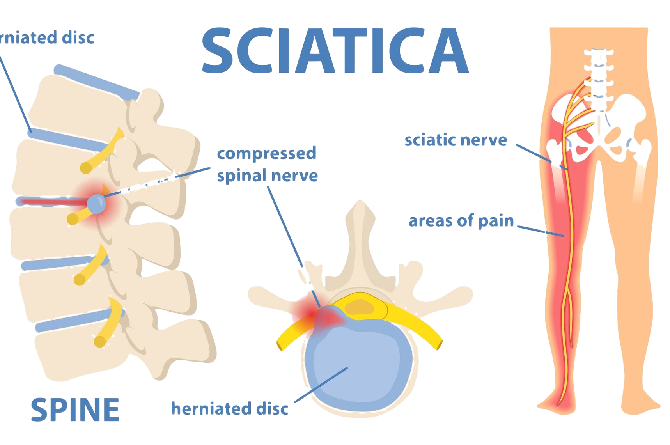
According to the Mayo Clinic , pain that spreads from the lower spine (lumbar) to the buttocks and down the back of the legs is a characteristic of sciatica.
In this case,ParentsYou will feel discomfort almost along the nerve path, but it will most likely follow the path from the lower back to the buttocks and the back of the thigh and calf.
The pain can vary greatly, from a mild ache to a sharp, burning, or excruciating pain. Sometimes it can feel like an electric shock. It can be worse whenParentsCoughing or sneezing, and prolonged sitting can worsen symptoms. Usually only one side of the body is affected.
Some people also experience numbness, tingling or muscle weakness in the affected leg or foot.Parentswill also feel pain in one part of the leg and numbness in the other.
Causes of Sciatica
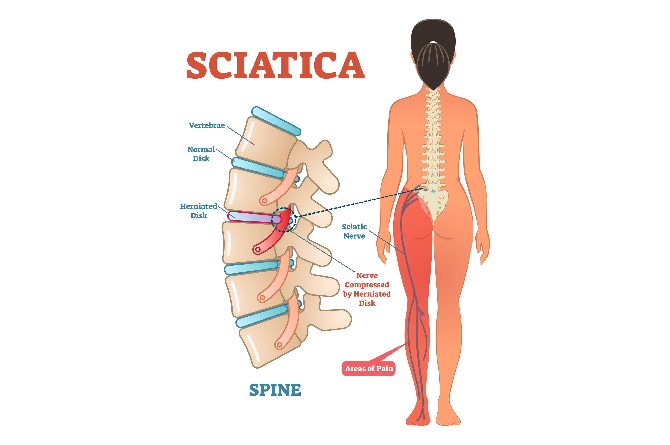
According toMedical News TodaySciatica, or sciatica, is a common symptom of several different medical conditions. However, an estimated 90 percent of cases are caused by a herniated (slipped) disc.
The spine consists of three parts:
- Vertebrae (individual bones in the spine that protect the underlying nerves)
- Nerve
- Joints
Joints are made of cartilage, a strong and resilient material. Cartilage acts as a cushion between each vertebra and allows the spine to be flexible.
A herniated disc occurs when a joint is pushed out of place, putting pressure on the sciatic nerve. Other causes of sciatica include:
- Lumbar spinal stenosis: Narrowing of the spinal cord in the lower back.
- Spondylolisthesis: A condition in which a joint slips forward over the vertebra below it.
- Tumors in the spine: These can press on the sciatic nerve root.
- Infection: Can affect the spine.
- Cauda equina syndrome: A rare but serious condition affecting the nerves in the lower part of the spinal cord that requires immediate medical attention.
- Other causes include spinal injuries.
However, in many cases, sciatica or sciatica is usually not caused by just one thing, but also the influence of a number of other factors.
Sciatica Risk Factors
There are a number of risk factors that influence someone experiencing sciatica, namely:
- Age: Age-related changes in the spine, such as herniated discs and bone spurs, are the most common causes of sciatica.
- Obesity : By increasing pressure on your spine, being overweight can contribute to spinal changes that trigger sciatica.
- Job: Jobs that requireParentsTwisting the back, carrying heavy loads or driving a motor vehicle for long periods may play a role in sciatica, but there is no conclusive evidence of the disease.
- Prolonged sitting: People who sit for long periods of time or have a sedentary lifestyle are more likely to develop sciatica than people who are active.
- Diabetes: This condition affects how your body uses blood sugar, increasing the risk of nerve damage.
Diagnosis and Treatment of Sciatica
Here are some important sciatica diagnoses and treatments forParentsknow so you can get the right treatment immediately.
How is Sciatica Diagnosed?
First, the doctor or healthcare professional will review your medical history. Next, the doctor will ask about any symptoms you’re experiencing.
During the physical exam, you will be asked to walk so your healthcare provider can see how your spine supports your weight. You will also be asked to walk on your toes and heels to assess calf muscle strength.
Additionally, the doctor will perform a leg raise and straightening test. For this test, you will be asked to lie on your back with your legs straight. The doctor will then slowly raise each leg and note the point where the pain is felt.
This test helps determine which nerves are affected and determine if there is a problem with any of the joints.ParentsThey are also asked to do stretches and other movements to indicate pain and check muscle flexibility and strength.
In addition, several other tests will be performed to diagnose sciatica, such as:
- Spinal X-rays to look for spinal fractures, disc problems, infections, tumors, and bone spurs.
- Magnetic resonance imaging(MRI) orcomputed tomography(CT)scanto see detailed images of the bones and soft tissues of the back. An MRI can show pressure on nerves, herniated discs, and any rheumatic conditions that may be compressing the nerves. An MRI is usually ordered to confirm a diagnosis of sciatica.
- Nerve conduction velocity studies/electromyography to check how well electrical impulses travel through the sciatic nerve and muscle response.
- Myelogram to determine whether the spine or disc is causing the pain.
How is Sciatica Treated?
The goal of treatment is to reduce pain and improve mobility. Depending on the cause, many cases of sciatica resolve over time with simple self-care treatments.
1. Simple Treatments for Treating Sciatica
- Applying ice and/or heat: First, use an ice pack to reduce pain and swelling. Apply an ice pack or a bag of frozen vegetables wrapped in a towel to the affected area. Apply it for 20 minutes, several times a day. Switch to a heat pack or heating pad after the first few days. Apply it for 20 minutes at a time. If you’re still in pain, alternate between the heat and cold compresses depending on your discomfort.
- Use over-the-counter medications: Take medications to reduce pain, inflammation, and swelling. Many common over-the-counter medications fall into this category, called nonsteroidal anti-inflammatory drugs (NSAIDs), including aspirin, ibuprofen (Advil®, Motrin®), and naproxen (Naprosyn®, Aleve®). Be careful if you choose to take aspirin. Aspirin can cause ulcers and bleeding in some people. If you cannot take NSAIDs, acetaminophen (Tylenol®) can be used instead.
- Stretching: Learn proper stretching from an instructor experienced with lower back pain. Include other general strengthening, core strengthening, and aerobic exercises.
2. Other Treatments to Cure Sciatica
- Prescription medications: A doctor or healthcare professional will prescribe muscle relaxants, such as cyclobenzaprine (Amrix®, Flexeril®), to relieve discomfort associated with muscle spasms. Other medications with pain-relieving effects that may be tried include tricyclic antidepressants and anti-seizure medications. Depending on the level of pain experienced, pain relievers may be used as part of sciatica treatment.
- Physical therapy: The goal of physical therapy is to find exercises that relieve sciatica by reducing pressure on the nerve. An exercise program should include stretching exercises to improve muscle flexibility and aerobic exercise (such as walking, swimming, or water aerobics). A healthcare provider may refer you to a physical therapist to customize a stretching and aerobic exercise program and recommend other exercises to strengthen the back, abdominal, and leg muscles.
- Spinal injections: Injections of corticosteroids, anti-inflammatory drugs, into the lower back can help reduce pain and swelling around the affected nerve roots. The injections provide short-term pain relief (usually up to three months) and are administered under local anesthesia as an outpatient treatment.Parentswill feel pressure and a burning or stinging sensation when the injection is given.
- Alternative therapies: Alternative therapies are gaining popularity and are used to treat and manage all types of pain. Alternative methods for improving sciatica pain include spinal manipulation by a licensed chiropractor, yoga, or acupuncture. Massage can help with muscle spasms that often accompany sciatica.Biofeedbackis an option to help manage pain and relieve stress.
Sciatica Prevention
Some causes of sciatica may not be preventable, such as degenerative disc disease, sciatica due to pregnancy or an accidental fall.
While it’s impossible to prevent all cases of sciatica, taking the following steps can help protect your back and reduce your risk of sciatica, namely:
1. Maintain Good Posture
Following good posture techniques when sitting, standing, lifting, and sleeping helps reduce stress on the lower back. Pain can be an early warning sign that your posture isn’t correct. If you start to feel pain in your legs or feet, adjust your posture accordingly.
2. Don’t smoke
Nicotine reduces blood supply to the bones. This weakens the spine and spinal discs, which puts more pressure on them and can lead to back and spinal problems.
3. Maintain a Healthy Weight
Excess weight and a poor diet are linked to inflammation and pain throughout your body. To lose weight or learn healthier eating habits, consider the Mediterranean diet. The closer you are to your ideal weight , the less stress you put on your spine.
4. Regular exercise
Exercises include stretching to maintain joint flexibility and core strengthening exercises. These muscles work to support the spine. Also, avoid sitting for long periods.
Sciatica Complications
Although most cases of sciatica are reversible, without proper treatment sciatica can potentially cause permanent nerve damage. Seek immediate medical attention ifParentsexperience:
- Loss of feeling in the feet
- Weakness in the legs
- Loss of bowel or bladder function
When to See a Doctor?
Although sciatica usually goes away on its own over time, contact a doctor if the treatment is unsuccessful or the pain gets worse.ParentsYou should see a doctor immediately if you experience:
- Sudden severe pain in the lower back or leg and numbness or muscle weakness in the leg.
- Pain following a violent injury, such as a traffic accident.
- Having difficulty controlling your bowels or bladder.
That’s an explanation of sciatica. We hope this information is helpful.
Republished with permission from theAsianParent Indonesia


 Together Against RSV
 Pregnancy
 Parenting
 Child
Child Feeding & Nutrition
 Education
 Lifestyle
 Events
 Holiday Hub
 Aptamil
 TAP Recommends
 Shopping
 Press Releases
 Project Sidekicks
 Community
 Advertise With Us
 Contact Us
 VIP
VIP Rewards
 VIP Parents
