Your little one is growing taller faster than other children his age. His arms, legs, and fingers are also longer, with a curved sternum. These signs are symptoms of Marfan Syndrome, Mom. Consult a doctor immediately for help managing the symptoms.
Here are other signs and symptoms of Marfan Syndrome in children along with an explanation of the causes, possible complications, and how to treat them.
Understanding Marfan Syndrome

Marfan syndrome (Marfan’s Syndrome), reported fromMayo Clinic, is a congenital disorder or abnormality that affects connective tissue, the fibers that hold together, support, and anchor internal organs and all structures within the body. This syndrome most commonly affects the heart, eyes, blood vessels, and skeleton.
In Marfan syndrome, the body’s connective tissue becomes abnormal, affecting several body systems, including the heart and blood vessels, bones, tendons, cartilage, eyes, skin, and lungs.
In reality, people with this syndrome have tall and thin bodies with arms, legs and fingers that are abnormally long and slender (arachnodactyly) and lens dislocation (the eye lens falls into an abnormal position).
The damage caused by this syndrome can be mild or severe. However, if your aorta (the large blood vessel that carries blood from the heart to the rest of the body) is affected, the condition can be life-threatening.
Generally, people with this syndrome inherit the disorder from one of their parents – mother or father.
Other names for this syndrome:
Hereditary Risk Factors

Marfan syndrome is hereditary, meaning it can be passed down to children from parents who also have the syndrome.
The National Health Services (NHS) notes that in approximately three-quarters (or 75 percent) of cases, Marfan syndrome is inherited from one parent. The syndrome is autosomal dominant, meaning a child can inherit it even if only one parent has the syndrome.
Therefore, there is a 1 in 2 (or about 50 percent) chance that children of parents with Marfan syndrome will inherit the syndrome – about 1 in 5,000 worldwide, according to Medline Plus.
Causes of Marfan Syndrome
Medline Plus explains on its website that the cause of Marfan Syndrome is an abnormal mutation in the FBN1 gene (processed early in reproduction).
The FBN1 gene is the gene that provides instructions for making a protein called fibrillin-1. Fibrillin-1 attaches (binds) to other fibrillin-1 proteins and other molecules to form thread-like filaments called microfibrils.
These microfibrils then become part of the fibers that provide strength and flexibility to connective tissue. Furthermore, microfibrils also bind molecules called growth factors and release them at various times to control the growth and repair of tissues and organs throughout the body.
When the FBN1 gene is mutated, it is possible that the amount of fibrillin-1 is reduced, leading to decreased microfibril formation. As a result, microfibrils cannot bind growth factors, resulting in excess growth factors and decreased elasticity in many tissues, leading to overgrowth and tissue instability in Marfan syndrome.
The defective fibrillin gene also causes some bones to grow longer than normal. This is why people with Marfan syndrome are unusually tall and have arms, legs, and fingers that grow longer than normal.
Who Can Get This Syndrome?
Because this disease is a genetic disease, people who are at risk of developing this disease are those who have parents with Marfan Syndrome!
Marfan syndrome also does not discriminate between genders and can occur equally in all races and ethnic groups.
Signs and symptoms

Photo: Mayo Foundation
Quoting Cleveland Clinic, the signs and symptoms of Marfan Syndrome vary widely, even if it occurs in other family members.
Symptoms vary depending on which area of the body is affected, some are invisible and others are very visible, and some only experience mild effects, but there are also complications that can be life-threatening.
Certainly, in most cases, the symptoms become more pronounced with age.
1. Physical Symptoms
Physical signs resulting from Marfan Syndrome include:
- Long and narrow face.
- Tall and thin body shape.
- Arms, legs, and fingers may appear too long for the rest of the body.
- Curved spine (scoliosis) which affects 60% of sufferers.
- The breastbone (sternum) may be prominent or protruding.
- Weak and easily dislocated joints.
- Flat feet.
- Dental problems include crowded, narrow, higher than the roof of the mouth and curved teeth.
- Eye problems. More than half of people with Marfan syndrome have eye problems, such as nearsightedness (blurred vision when looking at distant objects), lens subluxation (moving the lens out of its normal position), cataracts, eye deformities, retinal detachment, and glaucoma.
- The spine is curved abnormally.
- Flat feet .
2. Heart Problems
Approximately 90% of people with Marfan syndrome have heart and blood vessel problems. These problems can progress to:
- Aortic aneurysm. The wall of the aorta (the main artery that carries blood from the heart to the rest of the body) becomes weak and bulges out, causing it to rupture (m
- (explosion). This most often occurs at the aortic root (the point where the aorta leaves the heart).
- Aortic dissection. This is a tear in the inner layer of the three-layered aortic wall. The tear allows blood to enter the middle layer, which extends the tear and causes further separation and possible rupture of the aortic wall—a potentially fatal outcome.
- Heart valve problems. Marfan syndrome can also cause the valve tissue to weaken and stretch. This condition causes the valve to not close properly, leading to leaks and backflow of blood. When the valves don’t function properly, the heart has to work harder, affecting the function of the mitral valve.
- Enlarged heart muscle. The heart muscle can enlarge and weaken over time, leading to cardiomyopathy—even if the heart valves aren’t leaking. This condition can progress to heart failure.
- Abnormal heart rhythms. Arrhythmias can occur in some people with Marfan syndrome—often associated with mitral valve prolapse.
- Brain aneurysm. People with Marfan syndrome may have a history of intracranial bleeding (inside the skull) from a ruptured brain aneurysm.
3. Lung Problems
Changes in lung tissue that occur in people with Marfan Syndrome can increase this risk:
- Asthma
- Emphysema
- Chronic obstructive pulmonary disease (COPD)
- Bronchitis
- Pneumonia
- Collapsed lung (pneumothorax)
4. Skin Changes
The skin can become less elastic, causing wrinkles to occur.stretch markseven though the sufferer does not experience significant weight gain.
Diagnosis
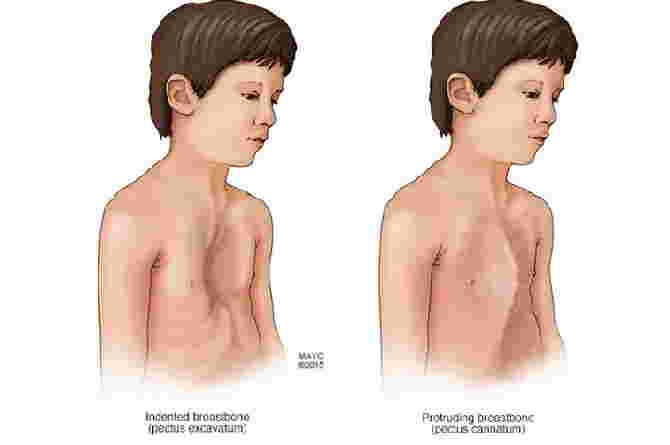
Photo: Mayo Foundation
Diagnosing Marfan syndrome can be difficult because symptoms can vary greatly from person to person. Furthermore, Marfan syndrome symptoms don’t always develop in childhood but can also be identified in adolescence.
Because Marfan Syndrome can affect tissues throughout the body, to confirm the diagnosis the doctor will do the following:
- Checking family health history by gathering information about family members who may have health problems related to Marfan Syndrome.
- Physical examination to look for typical signs or findings and look for symptoms associated with Marfan Syndrome.
- Cardiac tests to evaluate changes in the heart, blood vessels, and heart rhythm problems. These include a chest X-ray to view the heart’s borders, an electrocardiogram (ECG) to check the heart’s rate and rhythm, and an echocardiogram to check for heart valve problems, check the heart for enlargement or thickening of the ventricles, and check the aorta for enlargement, dissection (tears), or aneurysms.
- Blood test (genetic testing) to look for changes to FBN1.
If your doctor can’t see part of the aorta through echocardiography, or they think a dissection may have occurred, you may need further testing, such astransesophageal echo(TEE),magnetic resonance imaging(MRI), andcomputed tomography(CT).
Often a CT or MRI is also needed to check for dural ectasia, a bulging of the spinal lining that often causes no symptoms and is closely associated with back problems.
How to Care/Treat
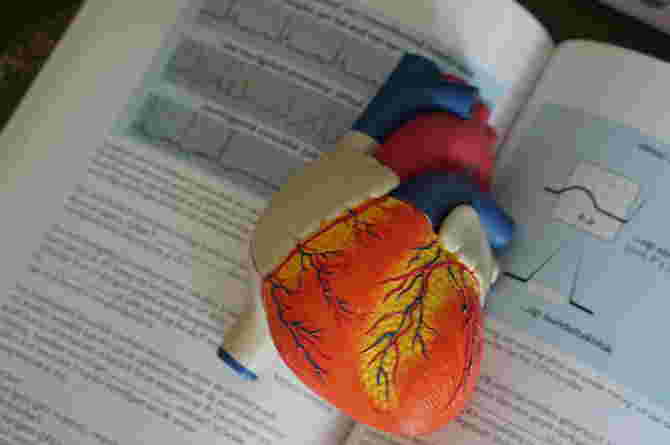
There is no specific medication to treat Marfan Syndrome, so treatment focuses on managing symptoms and reducing the risk of complications.
Because Marfan Syndrome can affect several different parts of the body, sufferers will receive different health care – different people usually have different cases.
Drugs
Medications used to treat Marfan syndrome-related complications include:
- Beta-blockers relax the heart and reduce the force and pressure of the heartbeat within the arteries. They also prevent or slow the enlargement of the aorta.
- Angiotensin receptor blockers (ARBs) are used to treat high blood pressure and heart failure. –they also slow the enlargement of the aorta as well asbeta-blockers.
Operation
The goal of surgery is to prevent the aorta from splitting or rupturing and to correct valve problems. The doctor’s decision regarding surgery is based on:
- The size of the patient’s aorta
- Expected normal size of the aorta
- Aortic growth rate
- Age, height, and gender
- Family history of aortic dissection
Two surgical techniques can be used to replace an enlarged area of the aorta with a graft:
- The traditional method, where the aorta is replaced with a graft and the aortic valve is replaced with a mechanical valve.
- Modified valve-sparing reimplantation method (valve-sparing modified reimplantation), the aorta is replaced with a tube graft and your own aortic valve is reattached.
If you decide to undergo surgery, make sure you choose an experienced healthcare team. You should also fully understand your condition, especially regarding Marfan syndrome.
When to See a Doctor?

Photo: Mayo Foundation
If you think you or your child may have Marfan Syndrome, consult your general practitioner or pediatrician. If your doctor suspects a problem, you will likely be referred to a specialist for further evaluation.
Regular monitoring to check for the progression of the damage is essential. Many people with Marfan syndrome eventually require preventive surgery to repair the aorta.
Don’t worry too much about this condition, Mom. Thanks to medical advances (especially heart surgery), life expectancy for people with Marfan Syndrome began to increase in the late 1970s.
In the past, the life expectancy of people with this syndrome was 32 years, but now the chances have passed the age of 72 years.
If you know you have this syndrome, it’s a good idea to make lifestyle changes to become healthier, and to undergo regular check-ups and treatment (undergoing surgery if deemed necessary).
And if your child has Marfan Syndrome, get accurate information about this disease and help your child get genetic counseling to help understand the disease and its future risks.
Republished with permission from theAsianParent Indonesia


 Together Against RSV
 Pregnancy
 Parenting
 Child
Child Feeding & Nutrition
 Education
 Lifestyle
 Events
 Holiday Hub
 Aptamil
 TAP Recommends
 Shopping
 Press Releases
 Project Sidekicks
 Community
 Advertise With Us
 Contact Us
 VIP
VIP Rewards
 VIP Parents
