Parentsmay wonder, can a 9-month-old baby eat whole rice? The best time for a baby to eat rice is often a question for many parents. However, what needs to be noted is that providing solid food according to the baby’s age is a crucial factor for optimal child growth and development.
If the baby is 6 months old or more,Parentscan start introducing your little one to rice. Once they reach six months or show signs of readiness for solid foods, rice can be an option. The thing to pay attention to is the texture, to avoid the risk of choking in your little one.
To learn more about whether 9-month-old babies can eat whole rice, let’s look at the following article.
Can a 9 Month Baby Eat Whole Rice

When can babies eat rice? At the first moment of MPASI, start by giving smooth mashed food or thin strained food. As the baby gets older,Parentscan change the consistency of food by making it thicker or coarser.
In general, babies can eat rice from the age of six months, as long as they are ready for solid foods. So in fact, children aged 9 months can eat rice safely as long as the texture of the rice is softened, easy to chew and swallow.
The Best Time to Give Rice to Babies

Before Parents introduce any solid food to your little one and answer the question can a 9 month old baby eat whole rice, your little one should meet the following criteria:
- Already able to sit up straight without support.
- There is no longer a tongue extrusion reflex, this reflex makes the baby stick out his tongue in response to food being put into his mouth.
- The ability to grab food and put it in the mouth.
- Readiness to chew.
Generally, this criterion is met when your little one is around 6 months old, for most babies. Breast milk or formula is the only thing your baby needs until then. Babies for the first 6 months are given all the nutrition they need from breast milk or formula and nothing else.
The introduction can be started using rice porridge with formula milk or breast milk with a smooth texture and easy to eat.Parentscan be combined with various balanced menus with other grains, as well as fruits and vegetables.
Vegetables and fruits are popular choices for introducing solid foods, but rice is also a filling option for your little one.
Parentscan introduce rice, the pattern will be the same as other foods.Parentscan give a gap of a few days with other new foods. By giving a gap,Parentscan predict and identify the possibility of food allergies.
After the age of 12 months, babies will start eating the same as adults, such as whole rice served with vegetables cooked in soup. Every child has a different pattern and readiness,ParentsYou can ask your pediatrician about your little one’s nutritional needs .
Benefits of Rice for Babies

Rice and rice products can be introduced as soon as your baby is ready to start solid foods, which is generally around 6 months of age (in a soft texture).
Nutritionally, rice is an excellent source of carbohydrates to provide energy to our bodies. Rice is a source of fiber, magnesium, manganese, Vitamins B1 and B6, selenium, and phosphorus. Your little one can reap all of these nutritional benefits once they are ready to be introduced to solid foods.
Rice is rich in carbohydrates which function as a source of energy for your little one. Another nutritional content is vitamin B1 (thiamine) which functions to help carbohydrate metabolism.
Rice also contains magnesium, an important component in forming bone structure and regulating muscle contractions. White rice also contains Manganese, to help the brain, nervous system, and enzymes in the body.
Quoting fromFatsecret, per 100 grams of white rice contains 130 calories. Meanwhile, according to the staple food calorie table per serving from the Ministry of Health, white rice calories per serving reach 175 cal.
ForParentswho don’t want to bother with food scales, an easy way to count white rice calories is with a tablespoon. One tablespoon of white rice contains only 24 calories. In one serving of white rice the size of a 180 gram bowl, it contains at least 50 grams of carbohydrates.
In general, brown rice contains more essential nutrients such as vitamin B, copper, fiber, iron, magnesium, and phosphorus than white rice. This is because the nutritious bran of white rice is often released from the grain during the peeling process, as reported by the pageSolid Starts.
The Risks of Giving Rice Too Early

Reporting from the pageVery Well FamilyEmily Sylvester, MS, RD, LDN, IBCLC of NurtureTalk says, “The first few months of breastfeeding are really about learning and experimenting. If babies are offered foods with coarse textures, like rice, too quickly, too often, or too forcefully, and they’re not developmentally ready or comfortable with them, it can lead to food aversions.”
ParentsIt is indeed best to carefully consider giving rice and other hard textured foods prematurely, for the following reasons:
1. Choking Risk
A baby’s mouth is still tiny and digestion is not yet perfect, it is worth paying attention to mothers to minimize the risk of choking . The baby’s reflex to digest food is not fully developed, avoid giving food that is still difficult to digest, including rice.
2. Digestive Disorders
The biggest risk of giving your baby rice too soon is that his digestive system may not be ready.
3. Malnutrition
Breast milk (ASI) is a crucial nutrient for the growth and development of the fetus. It contains carbohydrates, proteins, vitamins, minerals, fats and a variety of abundant nutrients that are essential to support the growth of the baby.
Its fatty acids support the baby’s brain development , help in the absorption of vitamins and are a good source of calories for the baby. If the baby gets solid food before its time, he will miss out on many important components in breast milk. Instead of being healthy, this is prone to making the baby deficient in nutrients.
Guide to Providing Complementary Foods
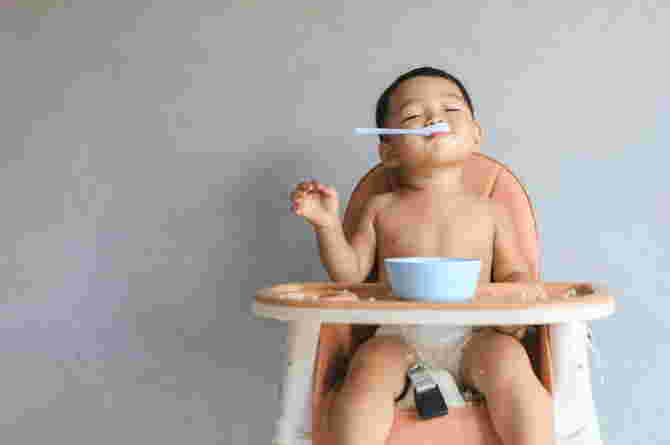
Can a 9 month old baby eat whole rice? As long as your little one is able to chew and swallow,ParentsYou can try giving it in sufficient portions with a gradual texture from soft to rough. Also keep in mind,ParentsIt is best to adjust to the nutritional needs and balanced food for your little one.
In order not to make a mistake in giving complementary food to children, there are 4 requirements for complementary food guidelines that must be met.Parentsknow. Here are 4 MPASI Guidelines for babies that must be followed.
1. On Time
MPASI can be started from the age of 6 months. At that time, breast milk alone is no longer sufficient for the baby’s needs.Parentsshould pay attention to the baby’s readiness to receive MPASI. Such as being able to sit with the head upright, coordinating the eyes, hands, and mouth to receive food, and being able to swallow solid food.
2. Nutritious
The MPASI given must meet the baby’s nutritional needs. Contains energy, carbohydrates, protein, fat, and micronutrients with doses adjusted to the age of the little one.
3. Correct Method of Administration
ParentsIt is also advisable to recognize the baby’s hunger and satiety signals, and adjust the frequency of giving complementary foods to needs.Parentscan estimate the amount and texture of MPASI according to the baby’s age.
4. Clean Preparation and Serving
MPASI should be prepared hygienically, make it a habit to wash your hands before preparing. Served using clean hands and eating utensils. Avoid mixing raw food with cooked food, and wash vegetables and fruits before eating.
These are the 4 guidelines for MPASI that are bestParentsknow when your child has started eating solid foods.
***
Demikian hal-hal yang sebaiknya Parents ketahui mengenai bolehkah bayi 9 bulan makan nasi utuh. Selamat mengenalkan makanan untuk si kecil.
Republished with permission from theAsianParent Indonesia


 Together Against RSV
 Pregnancy
 Parenting
 Child
Child Feeding & Nutrition
 Education
 Lifestyle
 Events
 Holiday Hub
 Aptamil
 TAP Recommends
 Shopping
 Press Releases
 Project Sidekicks
 Community
 Advertise With Us
 Contact Us
 VIP
VIP Rewards
 VIP Parents
