Forget the crowded restaurants, why not celebrate love under the stars?
Singaporean parents, tonight offers a rare and magical experience to share with your family. This Valentine’s Day, Venus, the planet of love, is putting on a celestial performance, shining at its brightest from our skies. With clear weather on our side, you can turn a simple evening into a cosmic memory.
This spectacular sight won’t return with such brilliance until 2026, so now is the perfect time to make it a night to remember.
Why Venus Shines So Bright on Valentine’s Day
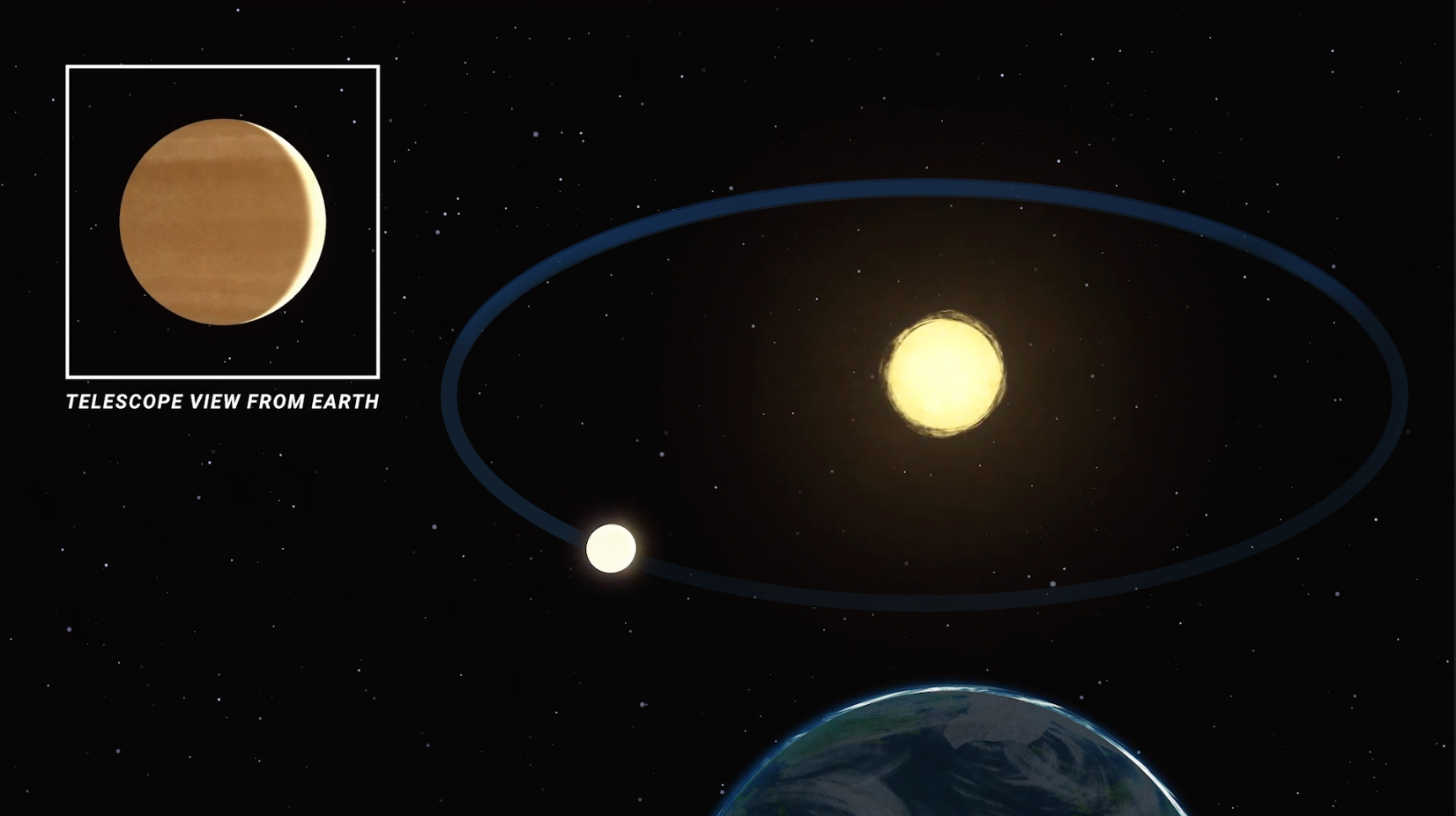
Source: NASA
Venus, famously known as the planet of love, is dazzling Singaporean skies tonight. According to NASA, Venus reaches its greatest brilliance not when it is full, but when it appears as a thin crescent. This is because Venus is closer to Earth during its crescent phase, making it appear bigger and brighter. The planet has been lighting up the night sky all February, but tonight is its peak illumination.
How and When to Spot Venus in Singapore
Timing is key, and in Singapore, the best time to view Venus on Valentine’s Day is just after sunset. Simply look west, and you can’t miss its radiant glow. There is no need for a telescope—Venus will be the brightest object in the sky after the moon. If the skies are clear, this evening’s view will be one for the family scrapbook.
Making Valentine’s Day Special for the Whole Family
Why not turn this rare cosmic event into a fun Valentine’s Day family activity? Pack some snacks, head to a local park or your condo rooftop, and let your kids marvel at the wonders of the universe. You can even turn it into a learning moment by sharing how Venus got its name from the Roman goddess of love and beauty.
Venus Won’t Be This Bright Again Until 2026
The next time Venus will shine this brightly from Earth is in September 2026. So, if you miss tonight, you’ll be waiting for over a year for another chance. Singapore’s urban lights may compete with the stars, but Venus will outshine them all. Plus, catching this event tonight is a special way to bond with your family on Valentine’s Day.
Planet Parade Until Feb. 20
Source: Facebook/Stargazing Singapore
But wait, there’s more! Venus isn’t the only star of the show. Until Feb. 20, six planets—Venus, Mars, Jupiter, Saturn, Neptune, and Uranus—will be visible in the Singapore night sky in a dazzling ‘planet parade.’ It’s your chance to swap Netflix for the night sky and let the cosmos do the entertaining.
What’s a planet parade? While not a scientific term, it’s what stargazers call it when multiple planets line up along the ecliptic—the solar system’s grand runway. And if you miss it, the next parade isn’t until January 2036, so don’t sleep on this!
The Science Centre Observatory says you can catch the magic anywhere in Singapore, as long as the skies stay clear. Venus, Saturn, Jupiter, and Mars are visible to the naked eye, but you’ll need a telescope to catch the elusive Neptune and Uranus.
For the best stargazing spots, head to open areas like Marina Barrage, East Coast Park, or Southern Ridges. Don’t miss this cosmic lineup—the next ‘planet parade’ won’t happen until 2036!
According to the Science Centre Observatory, while Venus, Jupiter, Mars, and Saturn can be seen with the naked eye, spotting Neptune and Uranus will require a telescope. So go grab your loved ones, a picnic blanket, and maybe a telescope for extra cosmic vibes. Because some nights, the best entertainment is straight from the universe.
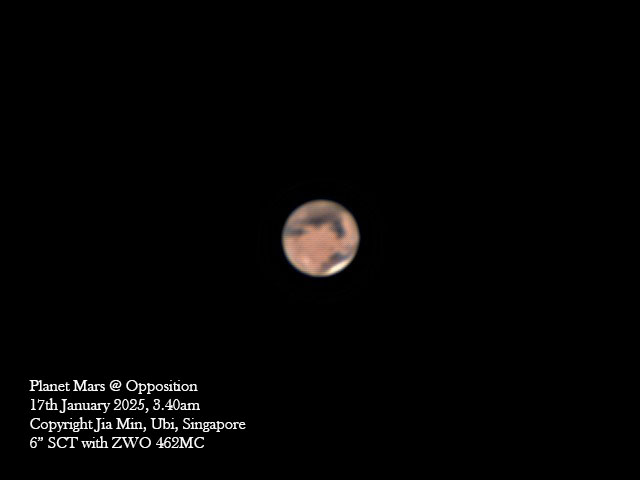
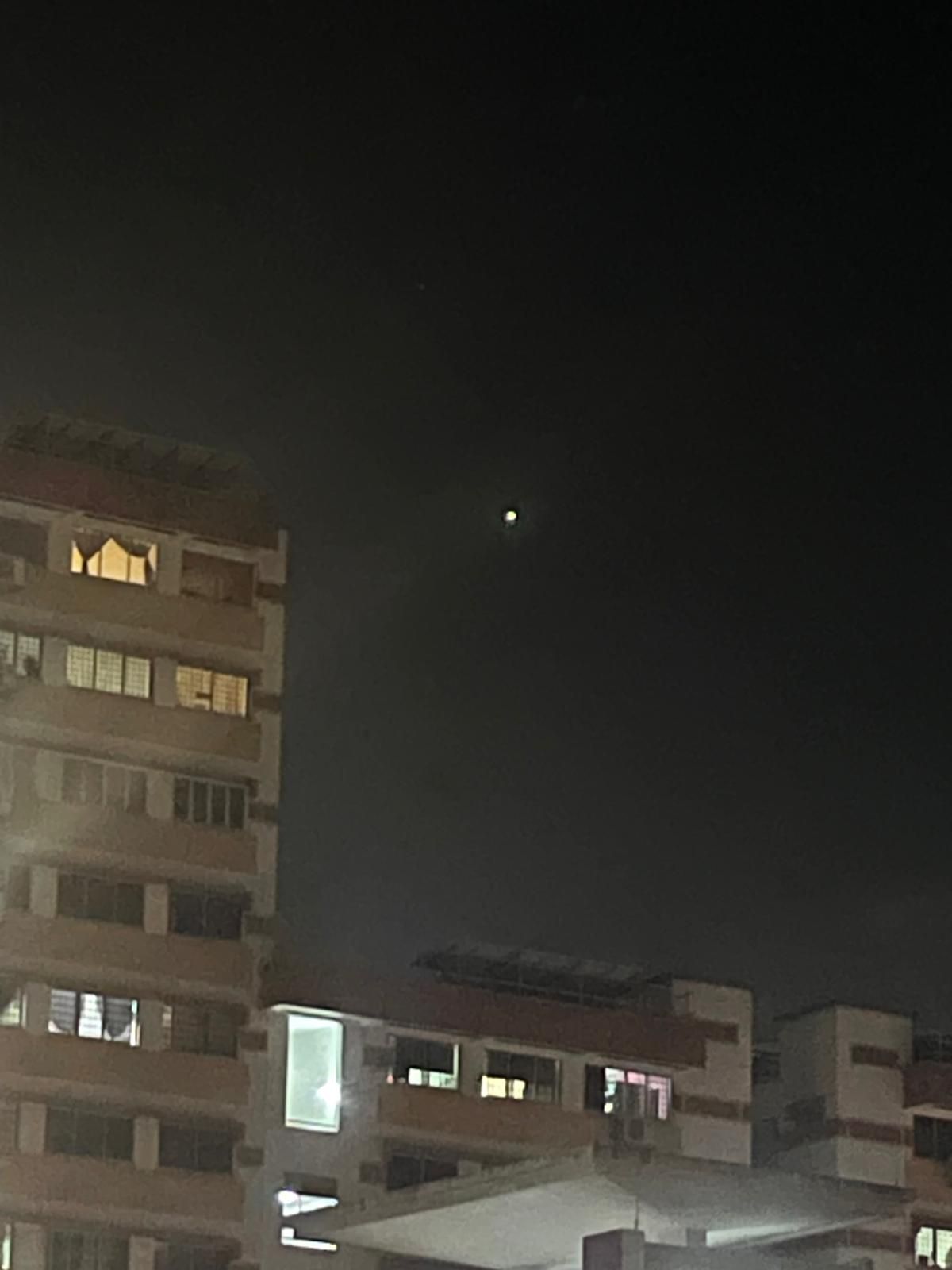
ICYMI: Mars stole the show on Jan. 16 during Mars in opposition, glowing with a distinctive reddish hue. This rare alignment between Earth, Mars, and the Sun made the Red Planet impossible to miss.
Source: Facebook/Foo Ct
Get ready for a month filled with celestial wonders. Using insights from NASA, here’s your guide to the best night sky events this February.
-
Venus and the Crescent Moon (Feb 1)
Look west after sunset to catch the Moon alongside brilliant Venus, with Saturn shining below. A stunning planetary trio to open the month.
-
The Moon Meets the Pleiades (Feb 5)
Watch the Moon pass close to the Pleiades star cluster. Use binoculars to see the Moon appear to cross this stellar group.
-
Jupiter Guides Your View (Feb 6)
Spot Jupiter easily as it forms a line with the Moon and the bright star Aldebaran. Jupiter will be the brightest object overhead after nightfall.
-
Mars and the Moon in Gemini (Feb 9)
Look east after dark to see the Moon beneath Mars, flanked by the Gemini twins, Pollux and Castor.
-
Full Snow Moon (Feb 12)
Enjoy the Full Snow Moon, named for midwinter’s snowy landscapes. It’s a perfect night for moon-gazing or a winter walk.
-
All Planets on Display
This month offers views of every planet:
-
Mercury: Appears near the horizon after sunset late in the month
-
Venus: Shines brightly in the western sky
-
Mars: Visible high in the east
-
Jupiter: Dominates overhead after sunset
-
Saturn: Visible low in the west early in the evening
-
Appulse vs. Conjunction—Know the Difference
When the Moon passes close to a planet, NASA calls it an appulse. Unlike conjunctions, which are about alignment, appulses focus on visual proximity in the sky.
-
Why Venus Shines Brightest as a Crescent
Venus reaches peak brightness during its crescent phase because it’s closer to Earth, appearing larger through a telescope.
-
Jupiter and Mars Dominate the Night
Throughout February, catch Jupiter high overhead and Mars glowing amber in the east, framed by Orion, Taurus, and Gemini.
-
Stay Updated with NASA’s Skywatching Guides
Explore more sky events through NASA’s monthly videos and sky charts at science.nasa.gov.
A Valentine’s Day to Remember
Why not make this Valentine’s Day truly unforgettable?
Step outside and let the velvety night sky embrace you and your loved ones. Bask in the soft glow of Venus, the planet of love, casting its shimmering light upon your evening. Feel the magic of the cosmos as you make a wish on this celestial beacon, or simply savor the quiet serenity under a blanket of stars.
Let the universe be your backdrop for laughter, reflection, and heartfelt connection. Tonight, it’s not just about love. It’s about wonder, joy, and the infinite sky above.
Happy Valentine’s Day!
ALSO READ
2025 Valentine’s Day Gift Ideas for You and Your Loved One
Navigating Valentine’s Day Post-Breakup: Finding Healing and Self-Love
Mum’s Wishlist: What I Really Want From My Husband on Valentine’s Day

