Think of Cristiano Ronaldo and you both have healthy legs. No injuries, no crutches, both perfectly capable of walking. But put you on the pitch with him, and suddenly the difference is glaring. His legs score goals, while yours are just… trying not to trip.
That’s exactly how eye movement works too, explains Andy Teo, Developmental Optometrist and founder of NeuroTree.
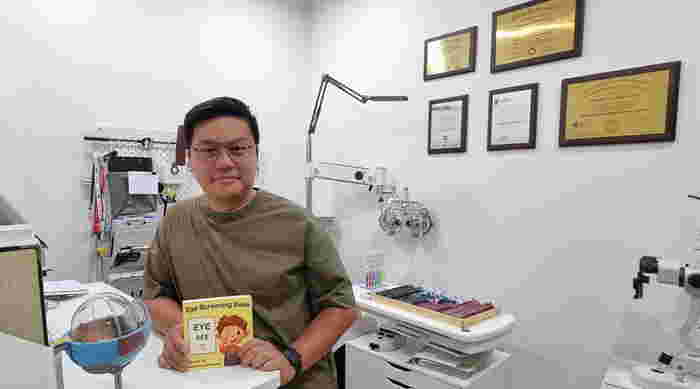
Source: Andy Teo
“You can have healthy eyes, just like you can have healthy legs. But performance is a different story. Ronaldo’s legs are trained for world-class soccer. Similarly, some people’s eyes are trained to move fast and efficiently across text. Others struggle, even if their eyesight is 20/20.”
This is where many parents miss the point. A child may have perfect eyesight, yet still stumble in class—skipping words, dreading homework, or copying notes wrongly. They don’t lack intelligence, and they’re not lazy. The problem? Their visual processing skills—the way the eyes and brain work together—are out of sync.
And until parents start looking at learning struggles through this lens, Andy warns, many children will continue to be misunderstood.
What Parents Don’t Realise
Most of us think “good vision” begins and ends with a simple eye check at school, or a visit to the optician when kids complain of blurry vision. But Andy has spent years uncovering a deeper story.

Source: Andy Teo
“When my preschool teachers asked me to check kids’ eyes, I realised most of them didn’t actually need glasses. Their vision was fine,” Andy recalls. “But they still struggled to copy from the board, or they skipped words. That made me wonder—if they’re seeing clearly, why are they struggling?”
This question led him into Developmental Optometry, a field that looks not just at eyesight, but how the eyes and brain work together. At NeuroTree, every child begins with a Learning Efficiency Screening—a diagnostic that goes far beyond standard eye exams.
The test looks at:
-
Eye tracking accuracy – how smoothly eyes follow text
-
Eye-hand coordination – how the body and vision sync
-
Motor coordination – how efficiently a child writes or copies
“These subtle skills are invisible in a regular screening, yet they can make the difference between a child thriving or shutting down in class,” Andy explains.
What Weak Eye Skills Look Like in the Classroom
Source: Andy Teo
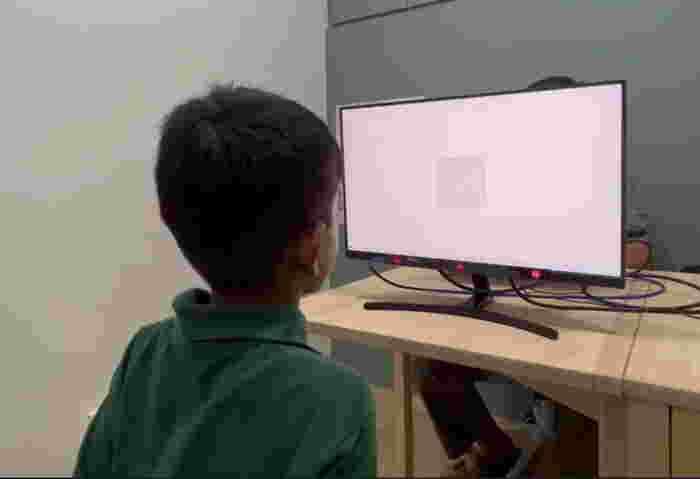
Imagine trying to copy from a whiteboard when your eyes can’t land on the right word. Or reading a passage only to realise you’ve skipped lines. These aren’t behaviour problems—they’re visual processing problems.
Andy breaks it down simply:
-
“If you have weak eye tracking, you skip words and lines. That weakens comprehension because your brain is working overtime just to locate text.”
-
“If your eyes don’t point together, words may blur, double, or even move. Parents often mistake this for dyslexia, but it’s really poor eye teaming.”
-
“If your eye focusing is weak, it’s like having the problem of a 40-year-old at age eight. You feel eye strain, you avoid near work, you get frustrated.”
In other words, a child can have perfect 20/20 vision and still struggle with reading or writing because their eye movement skills—not their eyesight—is the issue.
The Preschool Founder and Advocate for Learning Related Visual Skills
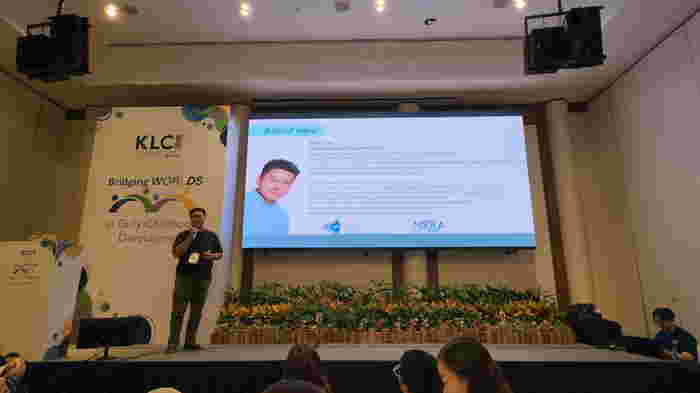
Andy’s journey is anything but linear. Alongside running a preschool since 2009, he founded NeuroTree to help parents and educators better understand how visual processes — such as eye movements, visual-motor coordination, and visual attention — affect a child’s ability to learn.
“I noticed kids in the same class, with the same teacher and environment, were performing very differently. I even thought about retraining as a dyslexia teacher,” he admits.
Source: Andy Teo
But when he studied developmental optometry, it clicked. “This was my aha moment—the science explaining why some children struggle despite having good eyesight. It’s not about laziness. It’s about efficiency: how well the eyes and brain work together.”
That insight has shaped NeuroTree’s 12-week Learning Efficiency Program, where kids strengthen core skills through structured exercises. Parents don’t just see anecdotal change—they get tangible progress reports at the end of the program.
One Child, One Transformation
Andy remembers a case that perfectly illustrates this. “We had a boy referred by an educational psychologist. He was bright, articulate, but refused to read. His parents were puzzled. They thought it might be dyslexia.”
After testing, Andy diagnosed him with convergence insufficiency—a weak ability to converge the eyes, which made words double or move. No wonder he avoided books.
“With vision therapy, his eye teaming improved. His mum told us he no longer complained about reading, and he even started picking up books on his own. That change was deeply meaningful,” Andy says.
Stories like these drive home the point that the right support can unlock a child’s potential, not through pushing harder, but by finally addressing the root cause.
Eyesight vs. Visual Processing: What’s the Difference?
Source: Andy Teo
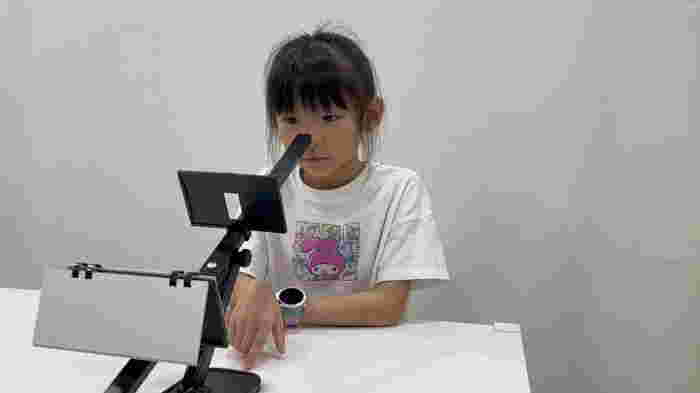
Here’s where many parents get tripped up. Eyesight is about clarity—whether your child can see the letters on the board. But visual processing is about how the eyes and brain interpret and organise that information.
“You don’t actually see with your eyes only,” Andy explains. “Eye movement is part of it, but visual processing is much bigger. It involves the brain—perceiving, remembering, coordinating. You can have healthy eyes but inefficient processing. It’s like comparing my legs to Ronaldo’s legs. Both are healthy, but the performance is worlds apart.”
Then he leans in with an even sharper analogy.
“If you’re not efficient, it doesn’t mean you’re not healthy. Otherwise, people with eye disease would all be bad at maths, and that’s not true. It’s like Ronaldo again—healthy feet, but if the brain can’t ‘eat,’ meaning process and direct those movements, the performance just isn’t there.”
The Parents’ Next Step
So what should you do if you suspect your child is struggling with eye movement and visual processing?
Parents are often told to watch for “careless mistakes,” but the real warning signs are usually hiding in plain sight. Skipped words, headaches after reading, difficulty copying from the board, or the sense that words are going blurry or even moving—these are not laziness or lack of effort. They are red flags pointing to deeper issues in eye movement and visual processing.
Yet, few parents even know this field exists. In Singapore, there are only a handful of accredited developmental optometrists, and the research is stark: as much as 70 to 90 per cent of all learning passes through the visual system. If no one checks how efficiently a child’s eyes and brain are working together, families risk missing the most fundamental piece of the learning puzzle.
Changing the Conversation About Learning
This isn’t about replacing tuition or schools. It’s about adding a missing layer. “Until eye movement and visual processing become part of the mainstream conversation, many children will continue to be misunderstood—not for lack of intelligence, but because we’re looking in the wrong place,” Andy says.
So before you rush into another tuition class or pile on more assessment books, pause and ask—could your child’s eye movement performance be the missing piece?
Just like Ronaldo doesn’t outscore everyone simply because he wants it more, your child won’t thrive in school just by trying harder. Performance isn’t about effort alone. It’s about whether the eyes and brain are moving in sync—like world-class legs on a world-class player.
And sometimes, the real win for your child doesn’t come from working harder, but from finally being able to see, track, and learn like a pro.


 Together Against RSV
 Pregnancy
 Parenting
 Child
Child Feeding & Nutrition
 Education
 Lifestyle
 Events
 Holiday Hub
 Aptamil
 TAP Recommends
 Shopping
 Press Releases
 Project Sidekicks
 Community
 Advertise With Us
 Contact Us
 VIP
VIP Rewards
 VIP Parents
