Singaporean parents have always put their money where their grades are. In 2023 alone, families poured nearly S$1.8 billion into tuition, a national pastime as familiar as kaya toast.
Yet, here’s the gut punch.
Despite the tuition boom, academic performance is trending downward globally. The issue isn’t a lack of worksheets, enrichment classes, or clever tutors. It’s something more primal, more modern, and more urgent — your child’s attention span.
“Singapore parents invest heavily in tuition, but more content often hits a hidden bottleneck: working memory,” says clinical psychologist and parent of three Hoa Ly, co-founder of Nuroe App. “This is the brain’s processor that lets kids hold information and work with it at the same time. When that processor is saturated, even excellent lessons won’t stick.”
Attention Span is the New National Curriculum Nobody Asked For
Back in 2004, people could focus on a screen for a whole 2.5 minutes before getting distracted. Now? According to UC Irvine’s Dr. Gloria Mark, that number has plummeted to just 47 seconds. And while our kids are drowning in apps, alerts, and algorithm-tuned dopamine hits, their brains are rewiring to handle constant micro-switches instead of sustained thinking.
“What modern apps do is they create a steady stream of cues that trigger tiny switches in our brains,” explains Ly. “Each switch makes the brain drop and rebuild the task you’re currently on. Do this dozens of times an hour and the brain adapts: it gets efficient at brief, stimulus-driven bursts and worse at sustained focus.”
The result? Kids ace TikTok transitions but stumble on PSLE word problems because their attention span collapses under pressure. That’s not laziness — it’s cognitive overload.
Why Tuition Isn’t Enough

Source: Shutterstock
But all that extra tuition could actually be hitting diminishing returns if your child’s “mental processor” is maxed out. Ly calls it “processor overload.”
“Take a P5 student who knows the ratio method: under PSLE timing, they still drop a step or miscopy a number. It looks like ‘careless mistakes,’ but it’s really processor overload,” Ly notes. “Strengthening working memory raises bandwidth for complex tasks and makes everything more efficient: tuition, school lessons, home practice. It’s the smarter sequence: upgrade the capacity to learn first, then every additional lesson compounds.”
Translation for parents? It’s not just about how much content your child consumes, but how well their brain can juggle it.
Meet the Brain’s Executive Assistant
Neuroscientists like Karolinska Institute’s Professor Torkel Klingberg (a Nobel Assembly member and co-founder of Nuroe) call working memory the “one skill to rule them all.” Think of it as the executive assistant of your child’s brain — keeping track of instructions, reminding them of goals, and making sure they don’t forget step three while still working on step two.
Ly puts it in everyday parent-speak:
-
“Maths word problems: keeping the method in mind while updating numbers step-by-step under time pressure.”
-
“English composition: holding the question’s intent and earlier sentences in mind while drafting the next line.”
-
“Science experiments: remembering the concept and variables while explaining cause-and-effect clearly.”
This isn’t rote memorisation. It’s the attention span engine that drives every subject. And yes, it can be trained.
Can an App Fix a Nation of Distracted Kids?

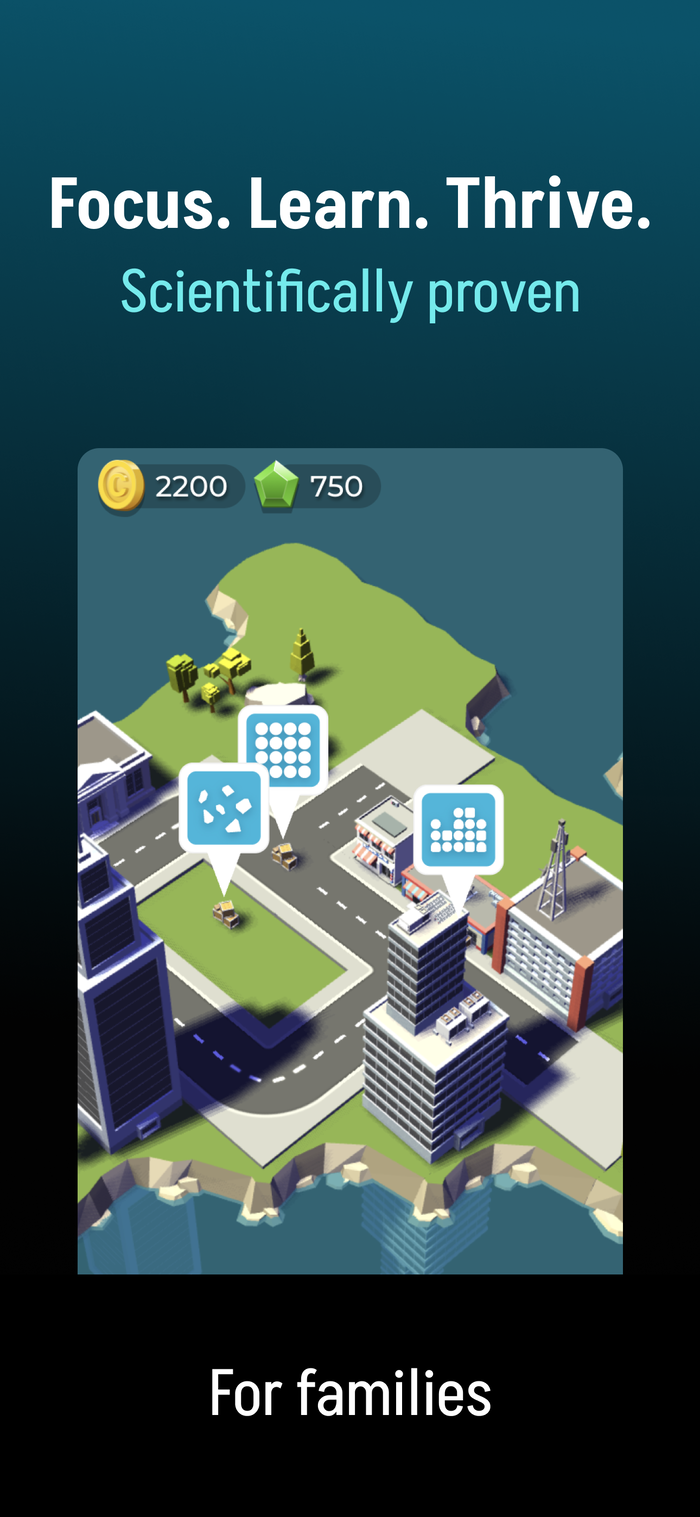
Enter Nuroe App, a science-backed, parent-controlled platform designed not to babysit your child with cartoons but to strengthen their brain’s core processor. Built on 120+ peer-reviewed studies and a 40-session training protocol, it asks only 15 minutes a day from kids — and a little patience from parents.
And it’s not just lab theory. A landmark Journal of Political Economy study tracked nearly 600 children. Those who trained their working memory at ages 6–7 were 50 percent more likely to enter rigorous secondary schools three years later. The Financial Times spotlighted similar results in Germany, where seven-year-olds who used the training were 16 percentage points more likely to enter elite Gymnasium tracks.
One teen in Singapore summed it up best: “Nuroe has helped me strengthen my focus to the point where I can resist addictive apps.”

How Parents Can Rebuild Attention Span at Home
Ly is practical, not preachy. He gets it — parents are busy, kids are wired (literally), and culture makes switching tasks inevitable. His advice blends science with survival.

Source: Freepik
-
Focus windows: “20–40 minutes on one task → 3–5 min screen-free reset → repeat.”
-
Cut switches at the source: “Phones out of reach + Do Not Disturb at set times.”
-
Capacity training: “A time-bounded working-memory programme (~40 sessions) raises resistance to distraction so study and tuition stick.”
Most importantly, Ly reminds parents not to confuse quick productivity with lasting learning. “AI is an amazing tool and a great assistant, but it can also lower the mental effort needed to plan, hold steps, and evaluate solutions. That feels productive, yet it offloads the very processes — working memory and step-by-step reasoning — that make learning stick.”
So, Should You Worry About Your Child’s Attention Span?
Yes, but don’t panic. Worry in the same way you worry about junk food. It’s everywhere, it’s tempting, and it chips away at health when unchecked. But with the right training, new habits, and better brain tools, kids can build resilience.
As Ly puts it, “Working memory naturally increases as children grow and learn — the brain is plastic — and it’s also trainable with structured practice. Strengthening working memory means kids don’t lose the thread, complete multi-step work, and sustain effort even when distractions pop up.”
In a city where parents will spend billions chasing the next best tuition centre, maybe the real flex is investing in the mental operating system that makes all that tuition worth it.


 Together Against RSV
 Pregnancy
 Parenting
 Child
Child Feeding & Nutrition
 Education
 Lifestyle
 Events
 Holiday Hub
 Aptamil
 TAP Recommends
 Shopping
 Press Releases
 Project Sidekicks
 Community
 Advertise With Us
 Contact Us
 VIP
VIP Rewards
 VIP Parents
