Imagine a schooling system where secondary students exam are streamlined, schedules are simplified, and stress levels are reduced. Well, for Secondary 4 and 5 students, that vision is becoming a reality. From 2027 onwards, Secondary 4 and 5 students will experience a significant shift in their examination process. No longer will they need to worry about double-sittings for their English and mother tongue exams. Instead, these crucial assessments will take place in September, alongside other subjects later in the year.
A Single Sitting for Success
Image from iStock
The Ministry of Education (MOE) is implementing changes aimed at enhancing the examination experience for secondary students exam. This means bidding farewell to the old system, where O-Level students had the option of sitting their mother tongue exam twice. Now, with just one sitting, students can focus their energy on preparing effectively and performing to the best of their abilities.
Navigating the Subject-Based Banding
The introduction of full subject-based banding brings about a paradigm shift in how students approach their education. No longer confined to rigid academic streams, students now have the flexibility to excel in subjects that align with their strengths. Whether it’s tackling G3, G2, or G1 level subjects, the emphasis is on individual progress and achievement.
Results and Intake Alignment
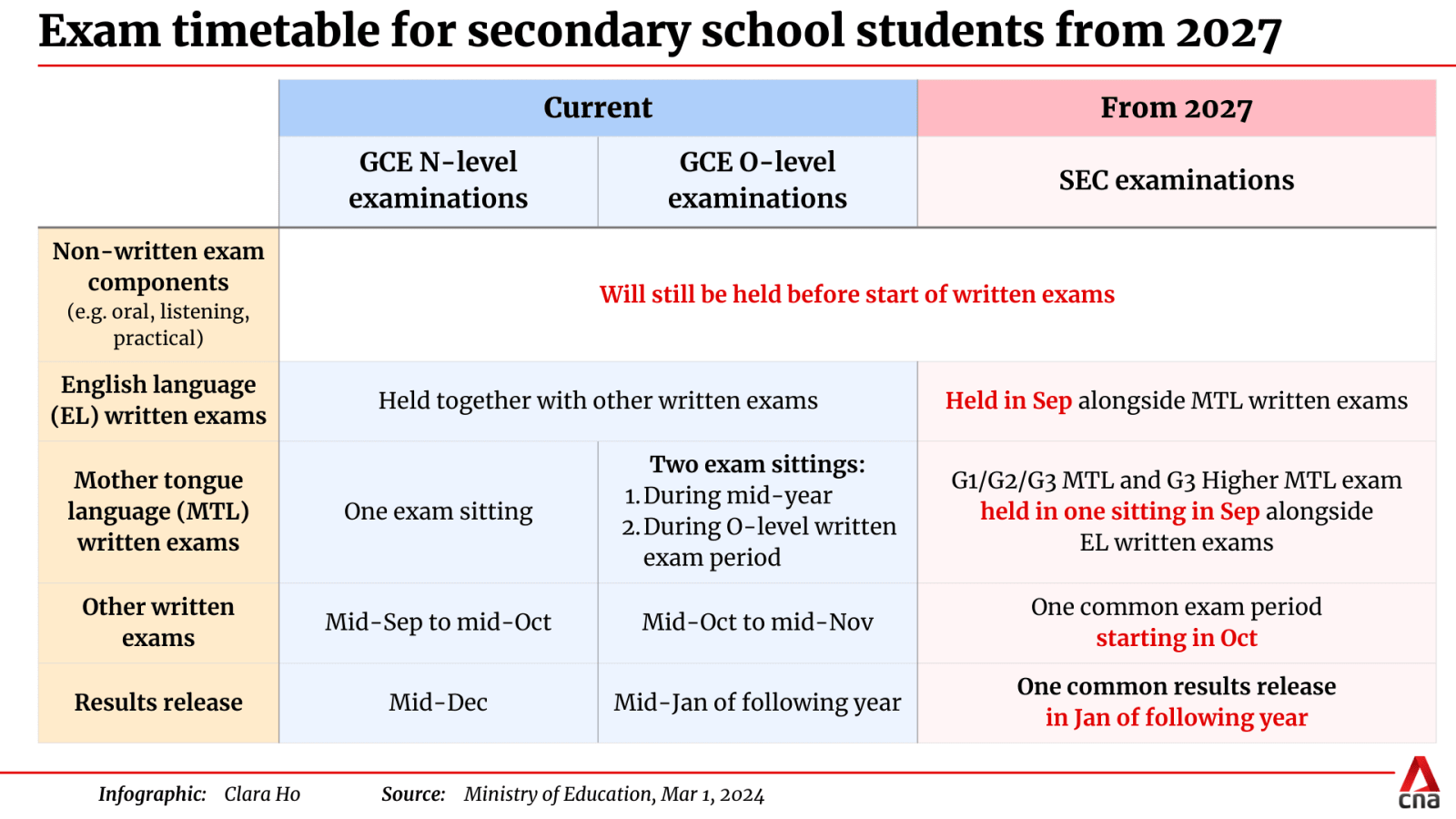
Image from CNA
With changes in examination timings come adjustments in result release schedules and tertiary institution intakes. Gone are the days of staggered result announcements and multiple ITE intakes. Instead, students can anticipate receiving their results in January of the following year, alongside a streamlined ITE intake process starting in April.
Evolution of Examination Practices
The decision to do away with mid-year sittings for mother tongue exams marks a significant departure from tradition. Initially introduced as a safety net in 1980, these additional sittings were aimed at ensuring students met post-secondary education requirements.
However, times have changed, and with approximately 97% of O-Level candidates meeting mother tongue requirements, the need for these safety nets has diminished.
Embracing Change
As the education landscape continues to evolve, so too must our examination practices. By repositioning English and mother tongue papers later in the academic year, students are given the opportunity to approach exams with a refreshed mindset. No longer do they need to cram for content-based subjects, as the revised schedule allows for a more balanced and manageable workload.
Revised Admission Criteria
In tandem with these changes, adjustments to polytechnic admission criteria are also on the horizon. With one of the best subjects now permissible at the G2 or G3 level, and a lower net aggregate cut-off score of 22 points, students have greater flexibility in showcasing their academic prowess.
In Conclusion
The overhaul of secondary student exams signifies a step towards a more student-centric and adaptive education system. By embracing change, streamlining processes, and prioritizing student well-being, the MOE is paving the way for a brighter future for Singaporean youth. So, here’s to a new era of secondary education, where success is not just measured by grades, but by the holistic development of every student.
ALSO READ:
A Cost Guide To School Fees In Singapore: Primary, Secondary, Post-Secondary and Tertiary
Top Secondary Schools in Singapore 2023 Based on PSLE Score Range for 2022
Selecting Secondary School: 8 Questions To Ask


 Together Against RSV
 Pregnancy
 Parenting
 Child
Child Feeding & Nutrition
 Education
 Lifestyle
 Events
 Holiday Hub
 Aptamil
 TAP Recommends
 Shopping
 Press Releases
 Project Sidekicks
 Community
 Advertise With Us
 Contact Us
 VIP
VIP Rewards
 VIP Parents
