Medical termserythema toxicum neonatorum(ETN) may not be familiar to the general public. However, some parents are likely already familiar with erythema toxicum neonatorum, commonly known as baby acne .
In medical terms, “erythema” means redness. “Toxicum neonatorum” refers to the rash occurring during the neonatal period. The neonatal period is the time between birth and 28 days of age.
Broadly speaking, erythema toxicum neonatorum, or baby acne, is a skin rash that commonly affects healthy newborns. It is sometimes known as erythema toxicum, baby acne, or toxic erythema of the newborn.
This condition presents as a rash or small, hard, yellowish or white bumps surrounded by a reddish ring. They sometimes contain fluid, which, although similar, is not pus. However, pus-filled spots (pustules) often appear. The rash can appear on the baby’s face, chest, arms, and legs, but usually not on the palms of the hands or soles of the feet.
Causes of Erythema Toxicum Neonatorum
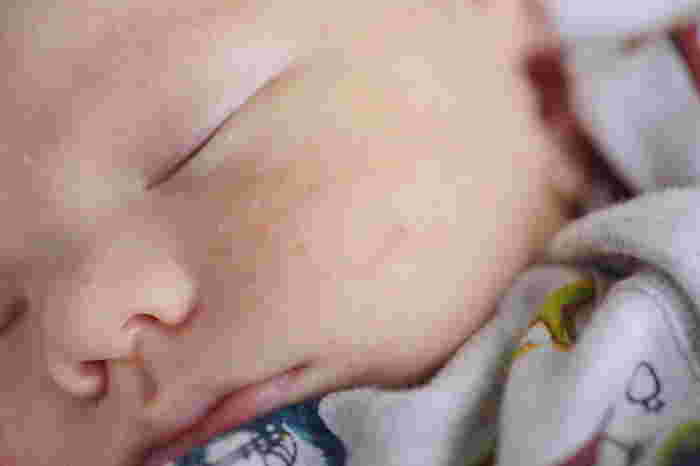
The cause of erythema toxicum neonatorum is not fully understood. However, various theories have been proposed to explain this common skin disorder in newborns.
According to the Patient website , erythema toxicum neonatorum is likely a normal effect of the baby’s immune system. It’s also unrelated to whether the baby is breastfed or formula-fed.
Meanwhile, as reported on Medscape , erythema toxicum neonatorum may be a direct hypersensitivity reaction to a substance transmitted transplacentally from the mother. This means that babies born through vaginal delivery or normal delivery are more likely to experience this type of acne.
Additionally, erythema toxicum neonatorum may be a response to microbes that have penetrated hair follicles. Inflammatory cells tend to be concentrated around hair follicles, and cocci-like microbes have been found in the follicular epithelium and within inflammatory cells. This is due to the rare occurrence of erythema toxicum neonatorum in hairless areas, such as the palms of the hands and soles of the feet.
Risk Factors for Erythema Toxicum Neonatorum
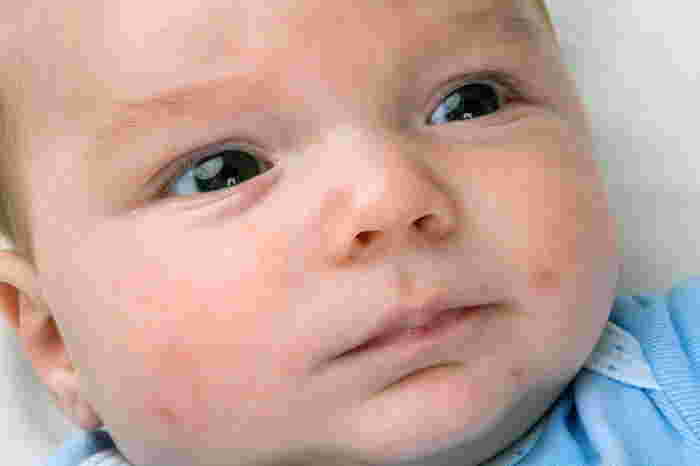
Other risk factors include higher birth weight, greater gestational age, giving birth to a boy can be a cause of erythema toxicum neonatorum.
Erythema appears within the first 4 days of life in full-term infants, with peak onset occurring within the first 48 hours after birth. In rare cases, erythema toxicum neonatorum has been reported to occur at birth.
Erythema toxicum neonatorum is rarely seen in premature infants ; it is believed that immunologically mature newborn skin is necessary for this skin condition to develop. A positive correlation has been recognized between the duration of labor and the incidence of erythema toxicum neonatorum and the duration of skin manifestations. A 2017 study published in the journal Pediatric Dermatology found a similar range in the incidence of erythema toxicum neonatorum, occurring in approximately one-third to one-half of full-term infants.
The study also showed that many male babies experienced erythema toxicum neonatorum. The prevalence was higher in boys, at 55%, compared to girls, at 30%. However, among first-time girls, the rate was higher than among first-time boys.
Symptoms of Erythema Toxicum Neonatorum

Symptoms of erythema toxicum neonatorum can be difficult to identify due to the frequent changes in a newborn’s skin. However, the most common symptoms are:
- Usually appears within one to two days after the baby is born.
- Appears with reddish spots
- Often found on the face or body
- Irregular, pale, reddish patches that vary in size
- In more severe cases, pale yellow or white spots may occur.
Diagnosis and Early Detection
The diagnosis of erythema toxicum neonatorum (ETN) is based on recognizing the characteristic history and physical findings in a healthy newborn. A complete history, physical examination, and Tzanck smear are necessary to differentiate between a benign transient pustular eruption of the newborn and a life-threatening disease.
How to Differentiate Erythema Toxicum Neonatorum from Other Skin Problems
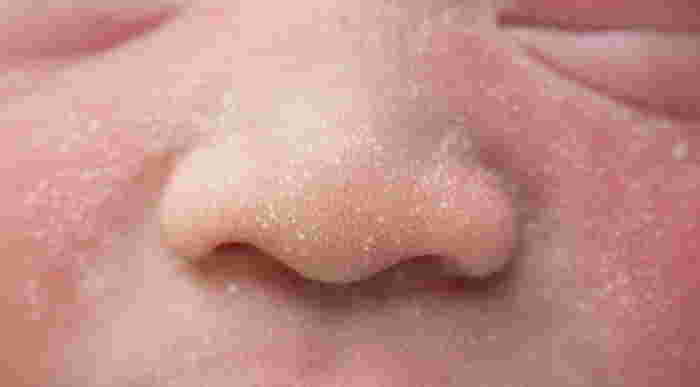
A newborn’s skin can exhibit various changes during the first four weeks of life. Almost all of these skin changes are concerning for parents. One such change is a skin rash. Rashes are very common in newborns and can be a significant source of concern for parents. While most rashes are temporary and benign, some require further examination.
Some types of rashes are usually caused by infections, for example, herpes simplex , Candida, and yeast infections.StaphylococcusThis rash is also classified as a vesiculopustular rash, such as erythema, acne neonatorum, melanosis, milia , and seborrheic dermatitis. However, these types of rashes have different characteristics. The differences are as follows:
-
Erythema toxicum neonatorum
According to the American Academy of Family Physicians (AAFP) , erythema toxicum neonatorum is a rashvesiculopustularWhile ETN can be diagnosed clinically based on its characteristic appearance, it can cause a baby’s skin to appear characteristically flea-bitten. However, ETN is not contagious and will resolve on its own.
In contrast to erythema toxicum neonatorum, transient neonatal pustular melanosis lesions lack surrounding erythema. Furthermore, these lesions rupture easily, leaving scars and pigmented macules that fade over three to four weeks. All areas of the body may be affected, including the palms and soles. This contrasts sharply with erythematous growths, which are not visible on the soles.
Although often referred to as baby acne, erythema toxicum neonatorum is distinct from neonatal acne ( acne neonatorum ). Neonatal acne typically consists of closed comedones on the forehead, nose, and cheeks, or possibly other locations. This acne is thought to occur due to stimulation of the sebaceous glands by maternal or infant androgens.
Parents should be advised that lesions usually resolve spontaneously within four months without scarring. Treatment of neonatal acne is generally not indicated, but infants may be treated with 2.5% benzoyl peroxide lotion if the lesions are extensive and persist for several months.
Milia, on the other hand, are 1-2 mm pearly white or yellow papules caused by keratin retention within the skin layers. Milia most commonly occur on the forehead, cheeks, nose, and chin, but they can also occur on the upper trunk, legs, penis, or mucous membranes. Milia disappear spontaneously, usually within the first month of life, although they can persist into the second or third month.
Seborrheic dermatitis is a very common rash characterized by erythema and oily scales. Many parents know this rash as “cradle cap” because it most often occurs on the scalp. Other affected areas may include the face, ears, and neck.
This is what differentiates erythema toxicum neonatorum from other skin problems in babies.
How Long Does It Take to Heal?
Most cases of erythema toxicum neonatorum (ETN) resolve within 3-4 days of onset without any residual symptoms. According to the American Osteopathic College of Dermatology (AOCD) , lesions can resolve spontaneously within 5-14 days without systemic manifestations. Recurrence is rare, but when it does occur, erythema toxicum neonatorum sometimes recurs with mild symptoms around the sixth week of life.
Treatment of Erythema Toxicum Neonatorum
This skin condition is not serious, does not harm the baby, and resolves without any treatment. Erythema does not cause any symptoms and disappears on its own, so no treatment is necessary.
However, parents are expected to be able to care for newborn baby’s skin normally and well, by:
- Bathe your baby with a soft washcloth until the umbilical cord falls off, which usually takes about 1-4 weeks.
- Do not bathe your baby in a bathtub until after the first week of life and after the umbilical cord falls off.
- Most babies only need to be bathed 2-3 times a week.
- Use warm water and a gentle, unscented baby cleanser.
When to See a Doctor?
According to the Kids Health page , erythema does not cause serious complications, but parents should contact a doctor if:
- The skin lumps get worse or have not gone away by the time the baby is about 2 weeks old.
- The baby has a new rash.
- The baby is not breastfeeding well.
- The baby has a fever of 100.4°F (38°C) or higher if the temperature is taken rectally.
- The baby appears lethargic, fussy, or very sleepy.
That’s complete information about erythema toxicum neonatorum, often called baby acne. We hope this is helpful, parents !
***
Republished with permission from theAsianParent Indonesia


 Together Against RSV
 Pregnancy
 Parenting
 Child
Child Feeding & Nutrition
 Education
 Lifestyle
 Events
 Holiday Hub
 Aptamil
 TAP Recommends
 Shopping
 Press Releases
 Project Sidekicks
 Community
 Advertise With Us
 Contact Us
 VIP
VIP Rewards
 VIP Parents
