Not all babies are born perfect. Some have birth defects that change the shape or function of one or more body parts. One of the birth defects that babies can experience is achondroplasia.
Achondroplasia is a birth defect that affects the development of a baby’s bones.
Usually this can be detected while the baby is still in the womb.
Here is a complete explanation of achondroplasia and its treatment.
Definition of Achondroplasia
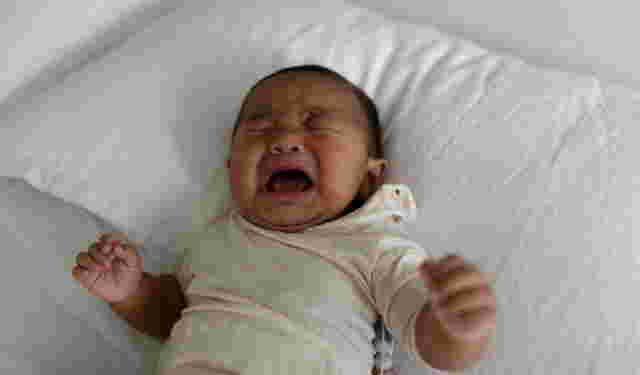
Achondroplasia is a genetic condition that affects a protein in the body called the fibroblast growth factor receptor.
In achondroplasia, this protein begins to function abnormally, namely by slowing bone growth in the cartilage of the growth plate.
This condition causes bones to be shorter, have an abnormal shape and the child’s stature becomes shorter.
The height of adults with achondroplasia ranges between 106 and 142 cm.
In addition, around 20 to 50 percent of children born with this condition will also experience neurological disorders.
Characteristics of Babies with Achondroplasia
There are some common signs or symptoms that indicate that someone is experiencing this condition. However, the symptoms in each child can be different.
Here are some characteristics of children with achondroplasia:
- The arms and legs are shortened, with the upper arms and thighs more affected than the forearms and lower legs
- Large head size with a prominent forehead and flat nasal bridge
- Crowded or misaligned teeth
- The lower spine is curved, this condition is also called lordosis (orsway back) which can cause kyphosis, or the development of a small hump near the shoulders that usually disappears once the child begins to walk.
- Small vertebral canal that can cause spinal cord compression in adolescence
- Lower legs bent
- Flat feet are short and wide
- There is an extra space between the middle finger and ring finger (also called trident hand)
- Poor muscle tone and loose joints
- Frequent middle ear infections can cause hearing loss.
- Delayed motor development , for example a child only starts walking between the ages of 18 and 24 months, rather than around 12 months.
- Has a “dome-like” skull and a very wide forehead.
- There is an excessive accumulation of fluid around the brain ( hydrocephalus )
- Low muscle tone ( hypotonia )
Causes of Achondroplasia
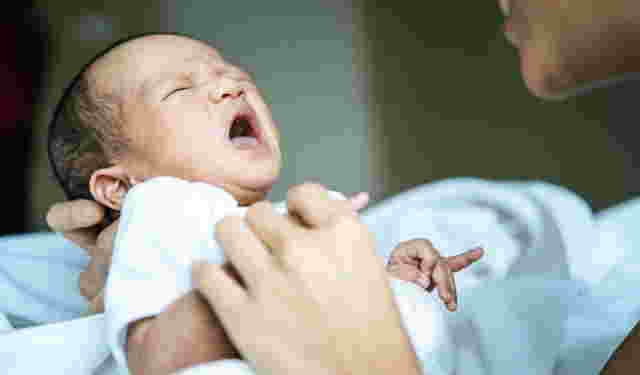
Achondroplasia occurs due to changes or mutations in genes. Genes themselves are parts of body cells that store instructions on how the body grows and works. Genes are passed down from parent to child.
Genetic mutation means that the instructions in a gene are changed. These changes can cause birth defects and other health conditions.
However, most babies with achondroplasia are born to parents who do not have the condition.
These changes only occur when there is a random gene change in the egg or sperm cells that join together and produce a fetus.
In addition, ifParen’t or your partner has achondroplasia, you can pass it on to your little one.
If only one of you has the condition, there is a 1 in 2 (50 percent) chance that your baby will have the condition. If you and your partner have achondroplasia, here are the odds:
- There is a 1 in 2 (50 percent) chance that your baby could have the condition.
- There is a 1 in 4 (25 percent) chance that your baby will not have the condition.
- There is a 1 in 4 (25 percent) chance that your baby has a severe type of achondroplasia that can cause death.
If you or your partner has achondroplasia or you are the parent of a child with the condition, talk to a genetic counselor about the condition.
A genetic counselor is someone who is trained to help you understand how genes, birth defects, and other medical conditions run in your family, and how they may affect the health of you and your baby.
Frequency of Occurrence
Achondroplasia dapat memengaruhi pria dan perempuan dalam jumlah yang sama. Gangguan ini dimulai pada janin yang sedang berkembang dan merupakan salah satu bentuk paling umum dari displasia tulang yang menyebabkan tinggi seseorang di bawah rata-rata.
Dikutip dari Johns Hopkins Medicine, perkiraan frekuensi achondroplasia berkisar dari sekitar satu dari 15.000 hingga satu dari 35.000 kelahiran.
Sedangkan pada situs Medline Plus mengatakan bahwa kondisi ini bisa terjadi pada 1 kali dari 15.000 hingga 40.000 kelahiran.
Diagnosis

Achondroplasia can be diagnosed before birth by ultrasound. Diagnosis can also be made after birth by performing a physical examination and a complete medical history.
DNA testing can now also be done before birth to confirm fetal ultrasound findings, especially for parents at high risk of having a child with achondroplasia.
Clinical and radiological features of achondroplasia in infants can be easily identified.
The typical findings present do not require molecular genetic testing to confirm the diagnosis.
When the clinical picture raises suspicion in a newborn, X-ray (radiography) findings can be used to help confirm the diagnosis.
However, if there is uncertainty, identification of genetic variants of the FGFR3 gene by molecular genetic testing can be used to establish the diagnosis.
Below is a list adapted from Pauli and Legare (2018) quoted fromrare diseases, regarding clinical signs in the diagnosis of achondroplasia.
- Disproportionate short stature
- Macrocephaly with frontal bossing
- Backward shift of the midface and depressed nasal bridge
- Shortening of the arm with excessive skin folds on the limb
- Elbow extension limitations
- Shortened fingers and toes (brachydactyly)
- Hand trident configuration
- Bow legs
- Excessive inward curve of the spine (lumbar lordosis)
- Joint weakness
Impact of Achondroplasia
If your child has achondroplasia, there is a possibility that he/she also has various other diseases. Therefore, treatment should also be done if the child also shows the following conditions as a result of achondroplasia:
Hydrocephalus
Hydrocephalus is characterized by an abnormally large head size. This can occur if signs or symptoms of increased intracranial pressure appear such as accelerated head growth, bulging fontanelle, changes in vision, and headaches.
Consult with your doctor, as a referral to a neurosurgeon may be necessary.
Computerized tomography(CT) ormagnetic resonance imaging(MRI) of the brain in infancy can be performed to determine the presence or absence of hydrocephalus.
Craniocervical Junction Narrowing
Whether or not a child requires suboccipital decompression should be determined by evaluation by a medical professional.
Symptomatic compression indications require immediate referral to a neurosurgeon.
Obstructive Sleep Apnea
If your child also experiences this sleep disorder as a result of achondroplasia, don’t worry, because it can be treated.
The way is through healthy weight loss, surgery to remove the tonsils and adenoids (adenotonsillectomy), positive airway pressure, and sometimes surgery to make a hole in the neck (tracheostomy).
Middle Ear Dysfunction
Ear tubes may be needed up until age seven or eight to treat frequent middle ear infections and prevent potential hearing loss.
Short Stature
This is an effect that is almost certain to occur in children with achondroplasia.
Studies on the use of growth hormone show that it can cause an initial acceleration in growth.
However, the effects diminish over time and few benefits last long.
Obesity
Being overweight can also be one of the effects of this disease .
Steps to avoid it should start from early childhood. You need to regularly monitor the specific weight and height standards for achondroplasia to pay attention to the healthy development of your child.
Varus Deformity
Symptomatic bowing of the foot (varus deformity) requires referral to an orthopedist.
However, if your child has a hunchback but does not have other symptoms, surgical correction is usually not necessary.
Spinal Deformity
You can prevent this condition by not letting your child sit without support in the first 12-18 months of age.
This can reduce the risk of a permanent backward curve in the mid-spine.(kyphosis).
Bracing or surgery may be necessary if your child has this, depending on the severity of the deformity if preventative measures are unsuccessful.
Spinal Stenosis
If your child shows signs of spinal stenosis, consult a doctor immediately. Immediate referral for surgery is necessary.
Social Developmental Delay
Children with achondroplasia may have difficulty with socialization and adjustment in school. B
Joining a support group may help families with these issues through peer support, personal example, and social awareness programs.
Prevention Methods
There is currently no way to prevent achondroplasia, as most cases are caused by unexpected new mutations.
Doctors may treat some children using growth hormone therapy, but this does not significantly affect the height of children with achondroplasia.
In some very specific cases, leg lengthening surgery may be considered.
Therefore, it is very important to check for bone abnormalities in children, especially in the back.
These problems can cause difficulty breathing and leg pain.
Kyphosis or “hunchback” may need to be corrected surgically if the child does not improve on his own when he begins to walk.
Some children with achondroplasia may also experience ear infections. These should be treated as soon as possible to prevent hearing loss.
***
Achondroplasia can happen to anyone at random. If this happens to your child, make sure to give him/her the right treatment and support to go through this condition.
***
Republished with permission from theAsianParent Indonesia


 Together Against RSV
 Pregnancy
 Parenting
 Child
Child Feeding & Nutrition
 Education
 Lifestyle
 Events
 Holiday Hub
 Aptamil
 TAP Recommends
 Shopping
 Press Releases
 Project Sidekicks
 Community
 Advertise With Us
 Contact Us
 VIP
VIP Rewards
 VIP Parents
