Your baby’s face has erupted in red bumps and someone has told you it’s “milk rash”. You’ve googled it, and the advice is wildly contradictory: moisturise it, dry it out, put breast milk on it, don’t put breast milk on it.
The contradictions have a simple cause: “milk rash” isn’t one condition. It’s a catch-all term parents and grandparents use for several different things, and they need opposite treatment. Sorting out which one you’re looking at is most of the job.
The reassuring part: nearly all of these are harmless, and most clear up on their own without you doing anything.
First, work out what you’re looking at
|
|---|
| What it looks like |
Probably |
What to do |
| Tiny white pearly dots, not red, not inflamed. Nose, cheeks, chin. |
Milia (milk spots): trapped keratin |
Nothing. Clears on its own in weeks. Don’t squeeze them. |
| Small red or white bumps, sometimes pustules. Cheeks, nose, forehead. May spread to chin, scalp, neck, chest. Usually appears 2–4 weeks old. |
Neonatal (baby) acne: baby’s oil glands reacting to your hormones |
Nothing. Resolves over weeks to months. Don’t use acne products. |
| Red, sometimes flaky patches around the mouth, chin and neck, worse after feeds. |
Drool or contact irritant rash: milk and saliva left on the skin |
Barrier ointment and keeping the area dry. This is the one that responds to what you do. |
| Dry, itchy, rough patches that keep coming back. Cheeks, then elbow and knee creases. |
Eczema |
Different problem, different treatment. See our baby eczema guide. |
| Bright red, well-defined, with raised edges and small separate spots scattered around the edge. In the skin folds. |
Fungal (candida) |
Needs an antifungal from your doctor. Barrier cream alone won’t clear it. |
If you take one thing from this article, take the bottom two rows. They’re the ones that need something from you.
Telling an irritant rash from a fungal one
These two get confused constantly, and treating one as the other is how some rashes drag on for weeks.
|
|---|
|
Irritant rash |
Fungal (candida) |
| Shape |
Flat, smooth patches |
Bright red, well-defined, raised edges |
| The folds |
Usually spared: creases look normal |
Usually involved: worst inside the creases |
| Edges |
Fades out gradually |
Small separate spots scattered beyond the main patch |
| Treatment |
Barrier ointment, keep dry |
Antifungal cream from a doctor |
The tell is the creases. An irritant rash tends to leave the deep folds alone, because the irritant doesn’t reach in there. A fungal rash loves them, because they’re warm and damp.
Barrier ointment won’t make a fungal rash worse, but it won’t clear it either. If you’ve been diligently applying ointment for a week and it hasn’t budged, or it’s angry inside the neck folds with little spots around the edge, stop guessing and get it looked at. Antifungal creams are cheap and work quickly, but you need the right one.
What helps a drool or milk rash
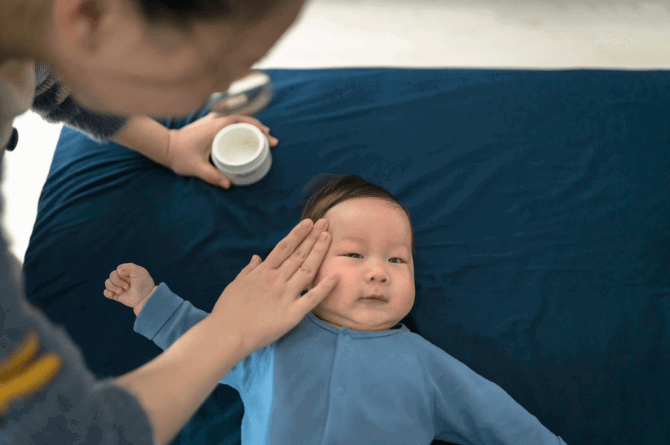
For the ordinary irritant version, the one caused by milk and saliva left on the skin, the approach is unglamorous and it works.
- Wipe gently after every feed. Plain water on a soft cloth. Dab, don’t scrub. Rubbing is itself an irritant.
- Dry the folds properly. Get right into the neck creases and pat them dry. This is the single most-skipped step, and in Singapore’s humidity it’s the one that counts most.
- Use a barrier ointment before feeds. A thick layer of plain petroleum jelly on the chin and neck stops milk and drool reaching the skin at all. Prevention beats treatment here.
- Put a soft cloth under the chin during feeds to catch drips before they run into the neck.
- Change damp clothing and bibs promptly. A soaked bib pressed against the chin all afternoon is the cause, not the cure.
- Keep baby cool. Heat and sweat make every one of these worse, and we’ve plenty of both.
- Fragrance-free everything: wash, lotion, detergent.
Most drool rash improves within a few days of doing this consistently. “Consistently” is the operative word: barrier ointment applied once is decoration.
Popular remedies and what they do
These circulate widely in parent groups. Some are sound, some need caveats, and one should go in the bin.
Petroleum jelly and healing ointments: sensible
A thick barrier layer works for irritant rash, and this is the most consistently recommended thing parents use.
One caveat: some popular healing ointments contain lanolin, and a minority of babies react to it, sometimes making things worse instead of better. If a product seems to be aggravating the rash, plain petroleum jelly is the simpler option.
Zinc oxide and nappy creams on the face or neck: with care
Parents do use nappy paste on stubborn redness in neck creases, and it can help for a day or two.
But be careful in folds. A thick occlusive paste holds moisture against skin, and if what you’re dealing with is fungal, you’re keeping it warm and damp while not treating it. If a fold rash isn’t improving after a couple of days, that’s your cue to see a doctor, not to apply more paste.
Breast milk on the rash: probably harmless, but not for fold rashes
Applying expressed milk to minor rashes is enormously popular and generally harmless on intact skin.
Two caveats. There isn’t good evidence it does much. And more importantly, don’t use it if there’s any chance the rash is fungal. Breast milk contains sugars, and yeast feeds on sugar; you’d be applying moisture and food to exactly the wrong rash. For anything bright red, well-defined, or inside a fold, skip it.
Jasmine flowers and other plant remedies: don’t
Rubbing flowers, herbs or plant oils on a baby’s inflamed face is a bad idea, however traditional it is. Plant material on broken or irritated skin risks contact dermatitis, and repeated exposure on damaged skin is precisely how sensitisation happens.
Baby skin is thin and already inflamed. It doesn’t need botanicals; it needs to be left alone under something bland.
Scrubbing, drying agents, and acne products: don’t
Baby acne isn’t teenage acne and doesn’t respond to the same things. Acne washes, alcohol-based products and vigorous cleansing all inflame skin that was going to clear up by itself.
Could it be a milk allergy?
Sometimes, but far less often than the internet suggests. And confusingly, a rash caused by milk touching the skin isn’t an allergy at all. It’s a contact irritation, and it happens to babies who tolerate milk perfectly well.
A genuine cow’s milk protein allergy usually comes with more than a rash. Look for a pattern, not a patch:
- Vomiting, reflux or persistent unsettledness after feeds
- Diarrhoea, or blood or mucus in the stools
- Poor weight gain
- Widespread eczema instead of a localised rash
- Hives, swelling, or breathing difficulty, which needs urgent medical attention
Before you cut dairy from your own diet, speak to a doctor. A Cochrane review found that maternal elimination during pregnancy and breastfeeding doesn’t prevent allergy, eczema or asthma, so as a precaution it doesn’t work. Where a baby has a diagnosed allergy, supervised elimination can help a great deal, but it should be guided by a doctor, allergist or dietitian, not started from a forum thread. Restrictive diets take a real toll on a breastfeeding mother.
When to call the doctor

Book an appointment if:
- The rash isn’t improving after about a week of consistent care
- It’s inside the skin folds, bright red with defined edges, or has small spots scattered around it
- It’s spreading beyond the face and neck
- Your baby seems itchy, uncomfortable or is sleeping badly because of it
- There are feeding symptoms alongside it: vomiting, blood or mucus in stools, poor weight gain
Seek help urgently if:
- The skin is weeping, blistering, or has yellow crusting, which suggests infection
- Your baby has a fever, or seems unwell in themselves
- There’s any swelling of the face, lips or tongue, or any difficulty breathing
You aren’t wasting anyone’s time by having a rash looked at. A photo on your phone helps enormously, because rashes have a habit of improving in the waiting room.
Common questions
What’s milk rash on a baby’s face?
“Milk rash” is a lay term rather than a medical diagnosis, and it covers several different things: milia, neonatal acne, drool or contact irritant rash, and sometimes eczema. That’s why the advice you find online contradicts itself: these conditions need different handling. Working out which one you’re looking at is most of the job.
How do I get rid of milk rash?
For the common drool or contact version: wipe gently with plain water after feeds, dry the neck folds properly, apply a thick barrier ointment such as petroleum jelly before feeds, change damp bibs and clothing promptly, and keep your baby cool. Most improve within a few days of doing this consistently. Milia and baby acne need nothing at all and clear on their own.
Can I put breast milk on my baby’s rash?
It’s popular and generally harmless on intact skin, though there isn’t good evidence it helps. Avoid it if there’s any chance the rash is fungal: breast milk contains sugars and yeast feeds on sugar, so you’d be applying moisture and food to the wrong kind of rash. Skip it for anything bright red, well-defined, or inside a skin fold.
How do I tell an irritant rash from a fungal one?
Look at the creases. An irritant rash tends to leave deep folds alone and appears as flat, smooth patches. A fungal rash is bright red with well-defined, raised edges, is usually worst inside the folds, and often has small separate spots scattered beyond the main patch. Fungal rashes need an antifungal cream from a doctor; barrier ointment alone won’t clear them.
Does milk rash mean my baby is allergic to milk?
Usually not. A rash caused by milk touching the skin is a contact irritation and happens to babies who digest milk perfectly well. A genuine cow’s milk protein allergy normally comes with other symptoms: vomiting, reflux, diarrhoea, blood or mucus in stools, poor weight gain or widespread eczema. Speak to a doctor before changing anyone’s diet.
Should I cut dairy from my diet while breastfeeding?
Not on your own initiative. A Cochrane review found maternal food elimination during pregnancy and breastfeeding didn’t prevent allergy, eczema or asthma. Where a baby has a diagnosed allergy, supervised elimination can help a great deal, but it should be guided by a doctor, allergist or dietitian, not started from advice online.
How long does baby acne last?
It typically appears at two to four weeks old and clears on its own over weeks to months. It needs no treatment, and acne products designed for teenagers shouldn’t be used. They’ll irritate skin that was going to settle by itself. It often looks redder after heat, drool or rubbing against clothing.
What are the white bumps on my newborn’s nose?
Most likely milia, sometimes called milk spots: tiny pearly white bumps caused by trapped keratin. Unlike baby acne they aren’t red or inflamed. They clear on their own within weeks and shouldn’t be squeezed or treated.
What to take away
Most of what gets called milk rash needs nothing but time. The version that does respond to you, the drool rash around the chin and neck, responds to a barrier ointment, dry folds and prompt bib changes, not to anything exotic.
And if it’s angry inside the creases and not shifting after a week, that’s a doctor’s visit, not another remedy.
More on baby skin
This article is general information and not a substitute for medical advice. Rashes are difficult to identify from a description, and easy to identify in person, so if you’re unsure, or if it isn’t improving, see your doctor.


 Together Against RSV
 Pregnancy
 Parenting
 Child
 Feeding & Nutrition
 Lifestyle
 Events
 TAP Recommends
 Shopping
 Press Releases
 Project Sidekicks
 Community
 Advertise With Us
 Contact Us
 VIP
 Rewards

