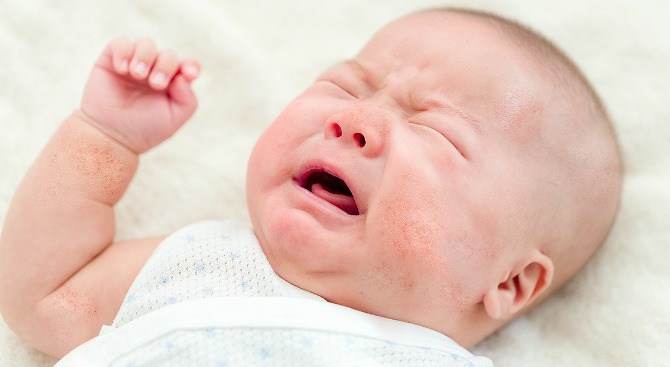
It’s 2am. Your baby has scratched their cheeks raw in their sleep again, you’ve been up four times, and you’re standing in the dark googling whether the cream you were given is safe.
If that’s you: this is manageable, most children improve enormously as they grow, and the two things that control eczema are unglamorous and boring. This article is about those two things, and about the fear that stops many parents doing the second one properly.
The two things that work
- Moisturise constantly, every day, whether or not the skin looks bad.
- Treat flares promptly and properly with what your doctor prescribed.
That’s it. Almost everything else is supporting cast: the special washes, the bamboo clothing, the elimination diets. When eczema stays badly controlled for months, the cause is usually one of these two being done half-heartedly, not a missing miracle product.
How to moisturise
Doing it properly means far more, far more often, than most parents are doing.
- At least twice a day, and more if you can. Realistically, four times a day during a bad patch.
- Keep going when the skin looks fine. This is prevention, not treatment. Stopping because it cleared is how the next flare starts.
- Apply to damp skin, within a few minutes of a bath, patted (not rubbed) dry.
- Downward strokes, in the direction the hair grows. Rubbing in circles irritates.
- Use enough that you’re buying more regularly. If a tub lasts months, you aren’t using enough.
- Wash with the moisturiser instead of soap where you can. Soap strips the skin barrier, which is the very thing that’s broken.
- Don’t dip fingers into the tub. Use a clean spoon or a pump. Otherwise you’re seeding it with bacteria and putting that back on broken skin.
One genuine safety warning most people have never heard: emollients are flammable, and they soak into fabric. Keep a heavily-moisturised baby away from naked flames, and be careful with clothing and bedding around candles, incense, and gas hobs.
What to know about steroid creams
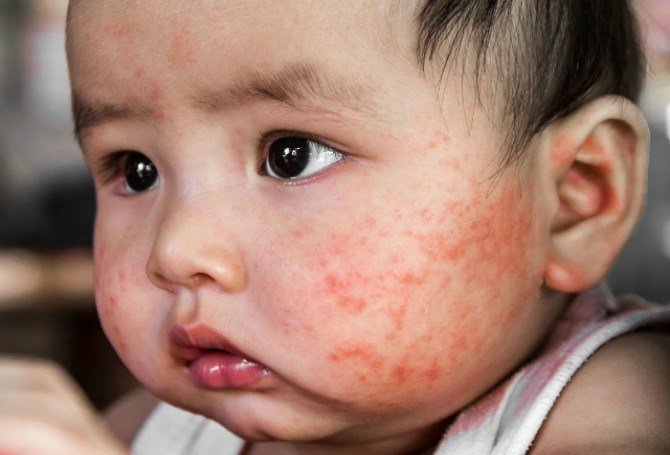
Almost every parent handed a steroid cream for a baby feels uneasy about it. That reaction is near-universal. Surveys find around three-quarters of people worry about using topical steroids, and roughly a quarter admit they haven’t used them as directed because of that worry.
Here’s what the evidence says, because SingHealth addresses these fears directly and the answers surprise most parents.
|
|---|
| What people believe |
What the evidence says |
| “Don’t use steroids on broken or weepy skin” |
False. They reduce the inflammation in cracked skin. If there’s infection, that may need antibiotics too. |
| “They’ll affect growth and development” |
False. Topical steroids are almost never absorbed into the bloodstream, and don’t affect growth or immune function. |
| “Skin becomes dependent on them” |
No evidence that topical steroids cause dependence or addiction. |
| “Moisturiser alone should be enough” |
False. Moisturisers only address dryness. Skin that’s red, itchy or bumpy is inflamed, and inflammation needs treating. |
Used at the right strength, quantity and duration, on the right areas, under your doctor’s supervision, skin damage is extremely uncommon.
The risk nobody warns you about
Delaying treatment doesn’t avoid steroids. It usually means needing stronger steroids, for longer, once the flare has taken hold. And untreated severe eczema has real consequences for a child’s physical, psychological and social development.
Treating a flare early and properly is how you end up using less steroid overall, not more.
How much cream to use
Under-application is extremely common, largely because parents are being cautious. The standard measure:
One fingertip unit is the amount squeezed from the tube along an adult index finger, from the tip to the first crease. That covers an area roughly the size of two adult hands.
Ask your doctor how many fingertip units for your baby’s affected areas, and how many days to use it. Then use that amount, for that long. A smear applied nervously for two days is the worst of both worlds: enough to be a steroid, not enough to work.
If you’re anxious about this, say so at the appointment instead of using less at home without telling anyone. Parents who get their information from a dermatologist instead of the internet worry much less, and their children have fewer flares.
Why Singapore’s heat makes eczema worse
Overseas eczema advice is written for cold, dry climates. Here, the trigger is usually the opposite.
- Heat and sweat are major triggers. Sweat trapped in skin folds is exactly where flares appear: the neck, the elbow creases, behind the knees.
- Don’t over-dress. The instinct to wrap a baby up doesn’t apply here. Light, loose, breathable.
- Cotton and bamboo, no tags, no wool, no polyester.
- Air-conditioning helps the itch but dries the air. Keep moisturising if the room is cold and dry overnight.
- Change damp clothes promptly: after a nap, after a feed, after any outdoor time.
- Dry the folds after every bath. Pat, don’t rub, and get right into the creases.
Bathing
- Lukewarm, not warm. Hot water strips oils and increases itch, however much your baby enjoys it.
- Short: five to ten minutes.
- No soap on eczema skin. Use an emollient wash instead. Plain water is fine on most of the body.
- Pat dry, then moisturise within minutes while the skin is still damp.
- Daily or every other day is fine if you moisturise straight after. What you do in the two minutes afterwards is more important than the old advice to bathe rarely.
Triggers to remove
- Fragrance, everywhere. Detergent, fabric softener, hand soap, your perfume, your moisturiser. Anything that touches the baby, and anything on the person holding the baby.
- Fabric softener and dryer sheets: drop them entirely; wool dryer balls do the job.
- Overheating, as above.
- Dust mites: wash bedding hot and weekly, keep soft toys to a minimum.
- Saliva. Drool around the mouth and chin causes an enormous amount of infant facial eczema. A barrier ointment before feeds and naps helps more than parents expect.
Eczema and food allergy
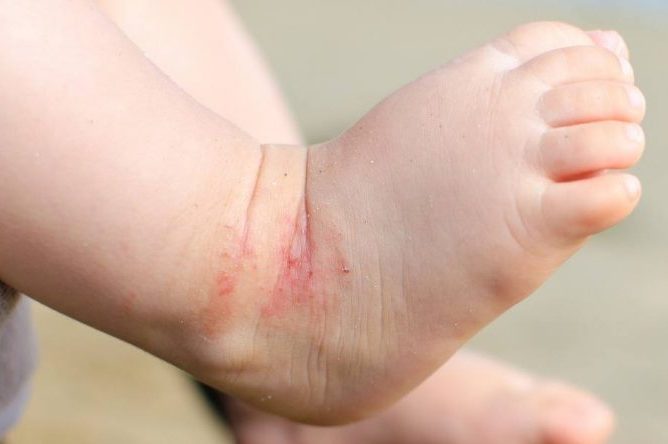
There’s a real relationship here, but it runs in a direction most people get backwards.
Current understanding is that where the immune system first meets a food decides what it does about it. Met through the gut, the body learns tolerance. Met through broken, inflamed skin, the body is more likely to treat it as a threat, and that’s how sensitisation happens.
Two things follow, and they’re both practical:
- Getting eczema under control is itself allergy prevention. Well-controlled skin is a barrier; broken skin is a doorway. This is another reason not to under-treat.
- Be cautious about food-based ingredients in skincare like oat, nut oils and goat’s milk, particularly on broken skin and particularly before your baby has eaten that food. Several popular baby products contain them.
Before you cut foods from your own diet
This deserves saying plainly, because a great many breastfeeding mothers are on increasingly restrictive diets, losing weight, and eating almost nothing.
A Cochrane review found that maternal food elimination during pregnancy and breastfeeding didn’t prevent food allergy sensitisation, eczema or asthma. As a preventive strategy, cutting foods out doesn’t work.
That’s different from a child with a diagnosed allergy or intolerance, where a supervised elimination can help a great deal. The difference is important:
- Don’t start an elimination diet on the internet’s advice. See your doctor, and ask for an allergist referral if there are other signs: reflux, blood or mucus in stools, poor weight gain, hives, vomiting.
- If you do eliminate, do it with a dietitian or allergist guiding you. Restrictive diets damage maternal nutrition and mental health, and an unsupervised one can drag on for months without an answer.
- Ask about introducing allergenic foods on time. Delaying peanut and egg is now generally understood to increase risk, not reduce it, though a baby with significant eczema should have that conversation with a doctor first.
When to see a doctor
Book an appointment if:
- The eczema isn’t improving after a week or two of proper treatment
- Your baby is losing sleep, or scratching until they bleed
- You’re not confident how to use what you were prescribed
- You keep clearing it and it keeps returning quickly. That usually means a maintenance plan is needed, not a stronger cream
Seek help urgently if the skin looks infected:
- Weeping, pus, or yellow crusting
- Blistering
- Skin that’s hot, swollen or rapidly spreading
- Fever, or a baby who seems unwell in themselves
Infected eczema is common, needs different treatment, and won’t settle with moisturiser and steroid alone.
Ask about a referral to a dermatologist or paediatric allergist if you’re going round in circles. Waiting lists can be long, so ask early, not after another six months of struggling.
Things to be careful with
- Bleach baths. These are a real, evidence-based treatment for some children with recurrent infected eczema. They’re prescribed, with a specific dilution. Don’t attempt one from a forum post. Ask your doctor whether it’s appropriate and get the exact ratio from them.
- Products containing food. See above: oat, nut oils and similar, especially on broken skin.
- Home remedies. Bitter melon, emu oil and similar circulate widely in parent groups. There’s no good evidence for them, and applying anything unfamiliar to inflamed skin can make things worse.
- Microbiome or stool tests sold direct to parents. The science isn’t at the point where these can tell you what to change, and they’re marketed hardest to people who are desperate.
- Anything that stings. If your baby cries when a product goes on, that product is wrong for them, however good the reviews.
What other parents find helps
Not medical advice, and what works for one baby fails for another, but these come up constantly from parents who’ve been through it:
- Keep a simple diary: date, what you applied, bath or no bath, how the skin looked. It makes the eventual dermatologist appointment ten times more productive, and you’ll spot patterns you’d otherwise miss.
- Cotton mittens or scratch sleeves at night. Trim nails constantly.
- Moisturise before bed and again if you’re up in the night.
- A barrier ointment on the chin and neck before feeds, for drool.
- Expect to try several moisturisers. Some babies react badly to ones that work brilliantly for others. That’s normal and not your fault.
Common questions
Are steroid creams safe for babies with eczema?
Yes, when used as prescribed. Topical steroids are almost never absorbed into the bloodstream and don’t affect a baby’s growth or immune function, and there’s no evidence they cause dependence. Used at the right strength, amount and duration under a doctor’s supervision, skin damage is extremely uncommon. Under-treating is the bigger risk: a flare left to worsen usually needs stronger steroids for longer.
How often should I moisturise my baby’s eczema?
At least twice a day and more often during a flare: four times a day is reasonable. Keep going when the skin looks clear, because moisturising is prevention, not treatment. Apply to damp skin within a few minutes of a bath, in downward strokes, and use a spoon or pump instead of dipping fingers into the tub.
Does my baby’s eczema mean they have a food allergy?
Not necessarily, though eczema and food allergy are linked. Current understanding is that food met through broken, inflamed skin is more likely to cause sensitisation, while food met through the gut builds tolerance, another reason to get the skin well controlled. If there are other signs such as vomiting, hives, blood or mucus in stools or poor weight gain, ask your doctor about an allergist referral.
Should I cut dairy out of my diet while breastfeeding?
Not on your own initiative. A Cochrane review found that maternal food elimination during pregnancy and breastfeeding didn’t prevent food allergy sensitisation, eczema or asthma. Where a baby has a diagnosed allergy, supervised elimination can help, but it should be guided by a doctor, allergist or dietitian, not started from advice online, because restrictive diets take a real toll on maternal nutrition and wellbeing.
Should I bathe my baby less if they’ve eczema?
What you do after the bath matters more than how often you bathe. Keep baths short and lukewarm, avoid soap on eczema skin in favour of an emollient wash, then pat dry and moisturise within a few minutes while the skin is still damp. Daily bathing is fine on that routine.
Why does my baby’s eczema get worse in Singapore’s weather?
Heat and sweat are major triggers, and sweat trapped in skin folds such as the neck, elbow creases and behind the knees is exactly where flares tend to appear. Dress your baby lightly in cotton or bamboo, change damp clothes promptly, dry the folds carefully after bathing, and remember that air-conditioning eases itching but dries the air, so keep moisturising.
When should I take my baby to the doctor for eczema?
If it isn’t improving after a week or two of proper treatment, if your baby is losing sleep or scratching until they bleed, or if you’re unsure how to use what you were prescribed. Seek help urgently for signs of infection: weeping, pus, yellow crusting, blistering, hot or rapidly spreading skin, or fever.
Will my baby grow out of eczema?
Many children improve substantially as they get older, and for a lot of families it becomes an occasional, manageable thing instead of a daily one. That isn’t a reason to leave it untreated in the meantime. Good control now protects both your baby’s comfort and their skin barrier.
The last word
If you take one thing from this: moisturise more than you think is necessary, and treat flares properly, not tentatively. Most eczema that stays out of control is under-treated, not untreatable.
And if you’re the parent standing in the dark at 2am feeling like you’re failing, you aren’t. This is hard, it’s exhausting, and it does get better.
More on baby health
Guidance on topical steroid safety and the fingertip unit from SingHealth. Emollient use and infection warning signs from NHS guidance on atopic eczema. This article is general information and isn’t a substitute for medical advice. Your doctor knows your baby and is the person to plan treatment with.


 Together Against RSV
 Pregnancy
 Parenting
 Child
 Feeding & Nutrition
 Events
 Holiday Hub
 Aptamil
 TAP Recommends
 Shopping
 Project Sidekicks
 Community
 Advertise With Us
 Contact Us
 VIP
 Rewards
 VIP Parents

