Just a few days after arriving home, your newborn’s skin looks yellow, as do the whites of his eyes. This condition is usually called jaundice. Don’t ignore it, Mom. If not treated immediately, your little one can experience kernicterus which can result in brain damage.
Getting to Know Kernicterus
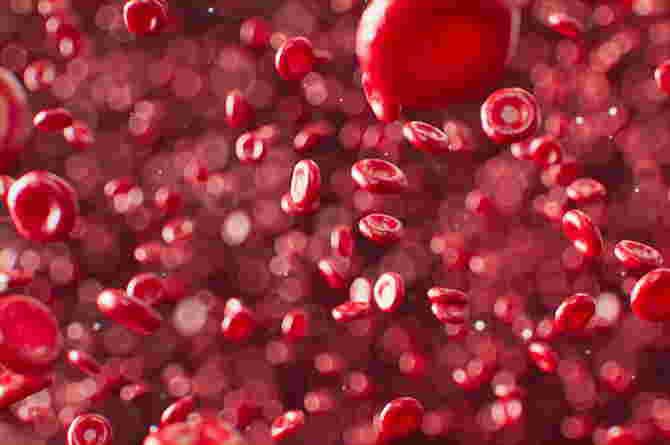
The Centers for Disease Control and Prevention (CDC) describes kernicterus as a yellow discoloration of the skin of a newborn baby. Kernicterus, more commonly known as jaundice, occurs when a chemical called bilirubin builds up or is very high in the baby’s blood (hyperbilirubinemia).
During pregnancy, the mother’s liver removes bilirubin for the baby. However, after birth, the baby’s liver must remove the bilirubin.
In some babies, the liver may not be developed enough to remove bilirubin efficiently. Especially when too much bilirubin builds up in a newborn’s body, it can cross the thin layer of tissue that separates the brain from the blood.
As a result, the baby’s skin and the whites of his eyes will look more yellow than usual. That is why this condition is called jaundice. If this condition is left too long and becomes worse, it can cause a condition called kernicterus.
Kernicterus is a type of brain damage that can result from high levels of bilirubin in a baby’s blood. It can have an impactathetoid cerebral palsy(athetoid cerebral palsy) and hearing loss . Kernicterus can also cause problems with vision and teeth, and can sometimes lead to intellectual disability.
According to the National Health Service (NHS), kernicterus is rare –pageRare Diseasescalled it a rare neurological disorder. But when it occurs, it can cause damage to the brain or central nervous system and spinal cord, which can be life-threatening.
LaunchHealthline ,There are two types of bilirubin in the body, namely:
- Unconjugated bilirubin( unconjugated bilirubin): This type of bilirubin moves from the bloodstream to the liver. It is not soluble in water so it can build up in body tissues.
- Conjugated bilirubin(conjugated bilirubin): It is converted from unconjugated bilirubin in the liver. Conjugated bilirubin is water soluble so it can be excreted from the body through the intestines.
If unconjugated bilirubin is not converted in the liver, it can build up in the baby’s body. When unconjugated bilirubin levels become very high, bilirubin can leak out of the blood and into the brain tissue, causing kernicterus.
Conjugated bilirubin does not cross from the blood to the brain and can usually be excreted from the body, therefore it does not cause kernicterus.
Reason

PagesRare Diseaseexplains that some cases of kernicterus occur randomly, without a clear reason (sporadic). Even some medical literature also says that excess bilirubin levels (hyperbilirubinemia) alone are not enough to produce kernicterus.
Some potential causes could be this:
1. Rh Disease or ABO Incompatibility
Sometimes the blood types of a baby and a mother are incompatible. If the mother is Rh-negative, it means that her red blood cells do not have a certain type of protein attached to them. It is possible that the baby has a different Rh factor than her. If the baby is Rh-positive, it means that they have a protein attached to their red blood cells – this is known as Rh incompatibility.
In Rh incompatibility, some of the fetus’ red blood cells can cross the placenta and enter the mother’s bloodstream. The mother’s immune system recognizes these cells as foreign and produces proteins called antibodies that attack the baby’s red blood cells. The mother’s antibodies can then enter the baby’s body through the placenta and destroy the baby’s red blood cells (hemolysis).
As the blood cells are destroyed, the baby’s bilirubin levels drop (anemia). After the baby is born, the bilirubin builds up in the bloodstream and brain. Rh disease is rare today, because the mother can be treated during pregnancy with anti-Rh globulin – if diagnosed during pregnancy.
A similar, but less severe, condition can sometimes occur when a mother has blood type O and her baby has a different blood type (ABO incompatibility). While the baby is also at higher risk of developing kernicterus, it can be prevented with proper monitoring and early treatment.
2. Crigler-Najjar syndrome
Babies with this congenital condition lack the enzyme needed to convert unconjugated bilirubin to conjugated bilirubin for excretion. As a result, high levels of bilirubin build up in the baby’s blood.
3. Kernicterus and Sulfonamides
Certain medications, including sulfonamides (also called sulfa drugs), have been linked to kernicterus. Sulfonamides are a group of antibiotics that combine the sulfonamide sulfamethoxazole with trimethoprim (SMX-TMP) to treat bacterial infections. Studies suggest that sulfonamides may increase the risk of kernicterus.
Unconjugated bilirubin normally travels through the bloodstream to the liver bound to the protein albumin. In the liver, it is converted to conjugated bilirubin so it can be excreted from the body.
Sulfonamides can release bilirubin from albumin, which increases the level of bilirubin in the blood. Unbound bilirubin can cross into the brain and cause kernicterus.
Frequency of Occurrence
About 60 percent of newborns experience jaundice with some experiencing more serious severity (higher bilirubin levels than others). Quoting pageWebMD, the incidence rate can reach 80%.
This rare neurological disorder can be experienced by both male and female babies.
Kernicterus Risk Factors
The following are some risk factors for kernicterus that require close monitoring and early management:
1. Premature Babies
Babies born before 37 weeks, or 8.5 months, are more likely to develop jaundice because their livers are not fully developed. An immature liver cannot remove as much bilirubin from the baby’s body.
2. Babies with Darker Skin
It may be difficult for mothers or pediatricians to recognize signs of jaundice in babies with darker skin tones. Examination can be done by examining the gums and inner lips of the baby to detect jaundice. If in doubt, a bilirubin test can also be done.
3. East Asian or Mediterranean descent
Babies born to East Asian or Mediterranean families are at higher risk of developing jaundice . Also, some families inherit conditions such as G6PD deficiency (a hereditary disease caused by an enzyme deficiency).
4. Difficulty Eating
Babies who do not consume breast milk/formula or who do not have regular bowel movements in the first few days of life are also more likely to develop jaundice.
5. Siblings with Jaundice
Babies with a sister or brother who has jaundice are more likely to develop jaundice.
6. Bruises
Babies with bruises at birth are more likely to develop jaundice. Bruises form when blood leaks out of blood vessels and causes the skin to look black and blue. Healing of large bruises can cause high bilirubin levels and jaundice in babies.
7. Blood Type
Born to a mother with blood type O or Rh-negative blood type. Mothers with this blood type sometimes give birth to babies with high bilirubin levels.
Symptom
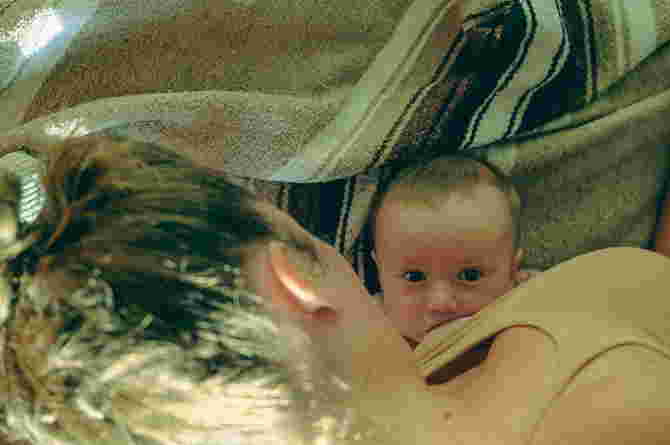
Jaundice usually appears first on the face and as bilirubin levels continue to rise, it will move to the chest, abdomen, arms, and legs. The whites of the eyes may also appear yellow.
Jaundice can be more difficult to see in babies with darker skin tones.
Toxic levels of bilirubin can accumulate in the brain and potentially result in a variety of symptoms and physical findings. Symptoms and physical findings of kernicterus usually appear on the second to fifth day after birth.
Early symptoms of kernicterus in babies include:
- Poor breast milk intake
- Baby becomes more fussy
- Her cries were high pitched
- Has no startle reflex
- Always sleepy or lacking energy (lethargy)
- Short pause in breathing (apn eu)
- The baby’s muscles are incredibly loose, like a rag doll.
As kernicterus progresses, additional symptoms may include mild to severe muscle spasms, including those in which the head and heels are flexed backward and the body is bent forward (opisthotonus), and/or involuntary muscle movements (spasticity). In addition, fever and vomiting may occur.
In some cases, babies with kernicterus can experience life-threatening complications.
Diagnosis
One test that can be used to check bilirubin levels islight meter. A doctor or nurse will check your baby’s bilirubin level by placing a lighted meter on your baby’s head.
The light meter tells how much bilirubin is in your baby’s skin, or their transcutaneous bilirubin (TcB) level. If your baby’s TcB level is high, it could be an indication that bilirubin is building up in their body.
Another test that your pediatrician may perform is a bilirubin blood test.
Handling
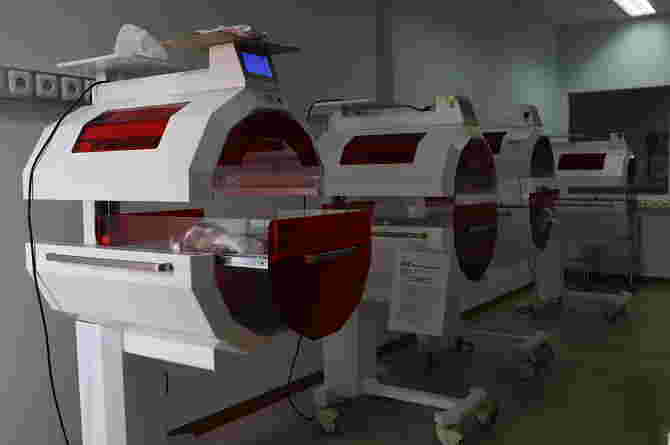
Mild jaundice may not require treatment. However, if your baby’s bilirubin levels are very high, or if your baby has certain risk factors (such as being born premature), some treatment may be necessary.
Treatment for kernicterus focuses on reducing the amount of unconjugated bilirubin in the blood. Early treatment is essential in an effort to prevent the symptoms and physical findings associated with kernicterus during the first months of life.
The treatments in question include:
1. Providing sufficient breast milk or formula milk
Babies who do not get enough fluids (breast milk or formula) have difficulty eliminating enough of the yellow pigment from jaundice through their urine and stool. Newborns should have at least six wet diapers a day, and their stools should change from dark green to yellow – if they are getting enough nutrients. Babies should also appear content after receiving breast milk/formula.
2. Phototherapy or Light Therapy
This involves using a special blue light (fluorescent light) on the baby’s skin in the hospital or at home which helps speed up the excretion of bilirubin from the skin and helps it break down (break down the bilirubin).
There was a time when experts recommended exposing babies to sunlight (morning), but this is no longer recommended because it can cause sunburn. Phototherapy is considered very safe, although it can cause some temporary side effects such as diarrhea and rashes.
3. Blood Transfusion
This is done if the baby has not responded to other treatments and needs to lower their bilirubin levels immediately. It is only done if the baby shows signs of brain damage from too much bilirubin.
4. Plasmapheresis
Plasmapheresis is a procedure to remove unwanted substances (toxins, metabolic substances, and plasma parts) from the blood. The method is, the blood is removed, separated from the plasma contaminated with toxins, then returned or exchanged with blood plasma (which is better from another person) which is transfused into the baby’s body.
5. Liver Transplant
Usually performed in very severe cases of kernicterus. Liver transplantation can be performed at an early age, before potential brain damage associated with kernicterus can develop.
Possible Complications
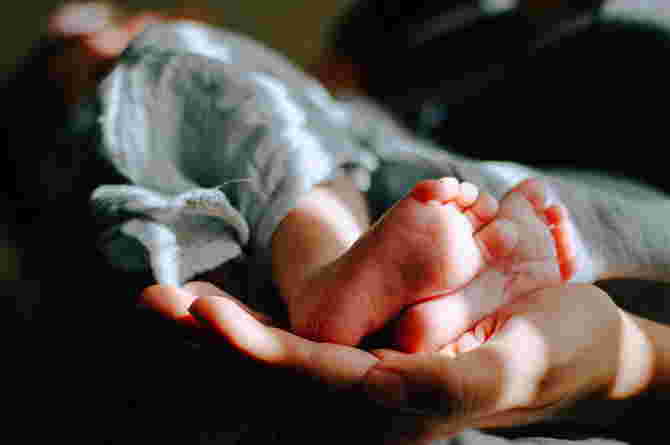
Brain damage caused by high bilirubin levels is called bilirubin encephalopathy. If significant brain damage occurs before treatment, a baby can have serious and permanent problems, such as:
- Cerebral palsy (a condition that affects movement and coordination).
- Hearing loss (can range from mild to severe).
- Slow to learn things involuntary twitching of various parts of their body.
- Having trouble maintaining normal eye movements (people with kernicterus have a tendency to look up or from side to side, rather than straight ahead).
- Poor tooth growth.
When to See a Doctor?
See a pediatrician the same day if you notice these signs in your baby:
- The skin is very yellow or orange in color (skin discoloration starts from the head and spreads to the toes).
- Difficulty waking up or not sleeping at all.
- Not breastfeeding well.
- Very fussy.
- Rarely urinating (BAK), can be seen from the condition of the diaper which is often dry – at least a newborn baby changes diapers due to BAK 4-6 times and 3-4 times due to BAB in 24 hours starting from the fourth day of birth.
Seek emergency medical help immediately if your baby experiences:
- Crying that is inconsolable or high pitched.
- The body is curved like a bow (head or neck and heels bent back and body forward).
- Having a stiff, limp, or drooping body.
- Having strange eye movements.
Prevention of Kernicterus
To prevent jaundice, hyperbilirubinemia or kernicterus, here’s what you can do:
- Screening babies 24-48 hours after birth.
- Know the risk factors (family history and matching with the mother’s blood type, for example).
- Breastfeed more intensively, don’t let the baby get dehydrated .
- Immediately check your baby’s condition to the pediatrician after seeing signs of jaundice in babies. Do not hesitate to ask the doctor to do a bilirubin jaundice test.
***
Remember, Mom, when severe jaundice is not treated immediately, this condition can cause kernicterus which results in brain damage.
Republished with permission from theAsianParent Indonesia


 Together Against RSV
 Pregnancy
 Parenting
 Child
Child Feeding & Nutrition
 Education
 Lifestyle
 Events
 Holiday Hub
 Aptamil
 TAP Recommends
 Shopping
 Press Releases
 Project Sidekicks
 Community
 Advertise With Us
 Contact Us
 VIP
VIP Rewards
