Up to seven in ten toddlers in Singapore1 encounter digestive discomfort, making gastrointestinal symptoms one of the most common challenges faced by parents.
These symptoms include gas, bloating, fussiness, constipation, and spit-up. Such discomfort often disrupts sleep routines and feeding schedules. It can be difficult for parents to comfort a child who cries frequently or refuses to eat.3
When digestive issues persist, the effects extend beyond the child. Parents may experience anxiety, interrupted rest, and strain in parent-child bonding.
The Critical First 1,000 Days: Why Toddler Tummies Need Extra Care
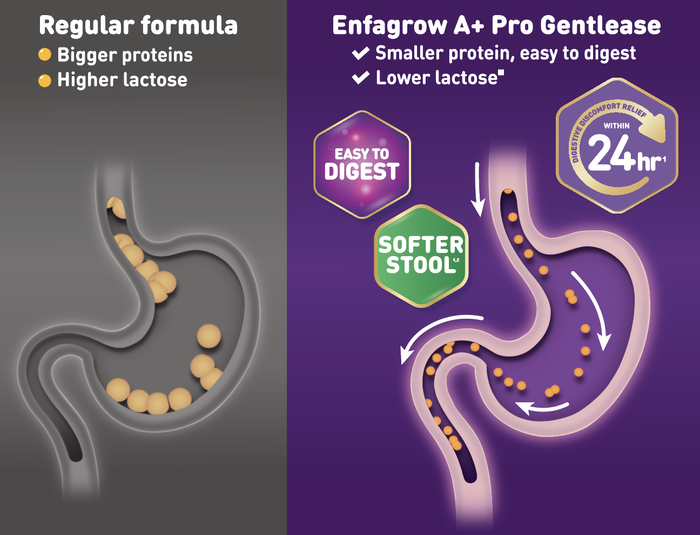
64% lower compared to Enfagrow A+ Pro Formulation. 1 Berseth CL. Clin Pediatr (Phila). 2009. Contains PHP designed to reduce digestive discomfort within 24hr; softer stool compared against the group fed a soy formula *Ribeiro et al, 2012
During the first one thousand days after conception through age two to three, the body, and especially the brain, grows at a rapid pace. Toddler digestive systems are still developing.
They have lower digestive enzyme activity and underdeveloped gut motility.9 These factors affect how effectively their body breaks down and moves food. As a result, the gut may process nutrients less efficiently. That can impact both nutrient absorption and the child’s overall comfort.
This developmental window also overlaps with a critical period for cognitive growth. The brain will be about 85% developed by age three.6 Gut health directly affects nutrient intake that supports physical and cognitive development.
When digestion is compromised, prolonged discomfort or poor nutrient uptake may hinder cognitive progress. Providing nutritional support during this stage is key to promoting both digestive comfort and brain development.
What Causes Digestive Discomfort in Toddlers?
While every child is unique, digestive discomfort tends to follow a few common patterns, especially during the early years when their bodies are still maturing. Let’s take a closer look at what’s really behind these tummy troubles.8
Undigested Proteins and Lactose
The immature digestive system may not fully break down complex protein chains or lactose sugar. These undigested nutrients ferment in the gut, producing gases that result in bloating and discomfort. This often leads to fussiness during or after feeding.7
Low Prebiotic Intake
Prebiotics such as PDX and GOS nourish beneficial gut bacteria.4 Without sufficient intake, toddlers may experience hard stools and constipation. These symptoms can contribute to pain and irregular bowel movements.
Intolerance to Lactose
Persistent discomfort often results in frequent crying, disrupted sleep, and feeding problems. Over time, this creates stress and fatigue for caregivers and can also affect the toddler’s emotional well-being, increasing clinginess or irritability.
The Science Behind What Works

Research highlights three evidence-based nutritional approaches to ease digestion and support gut health in toddlers.2
- Partially hydrolysed proteins are proteins that are broken down into smaller sizes.2
- Lower lactose formulas decrease fermentable sugars, which reduces gas and bloating in toddlers with lactose sensitivity.
- Prebiotics such as PDX and GOS nourish good gut bacteria, supporting softening stools and reducing constipation.4
These strategies have shown measurable results in easing digestive discomfort in children, improving both comfort and daily routines for families.
Digestive discomfort relief within 24 Hours? Yes, with Enfagrow A+ Pro Gentlease
When gentle and fast relief is needed, Enfagrow A+ Pro Gentlease delivers scientifically designed support for toddlers with sensitive digestive systems.5
- Partially hydrolysed proteins help reduce bloating and gasiness by breaking proteins into smaller, easier-to-digest parts.
- Lower lactose* levels make it suitable for toddlers with immature digestive enzyme activity.
- Prebiotics PDX and GOS support healthy gut flora and soften stools to ease constipation.4
This formula is also enriched with MFGM and DHA, which are crucial for cognitive development. Studies show that parents notice a reduction in crying, fussiness, and gas within 24 hours, with softer stools typically observed within the first three days.10

*Lower than Enfagrow A+ Pro range
- IQVIA Consumer Health. (2024). Singapore Mother’s Journey [Market Report]. Cited in Enfagrow Singapore. www.instagram.com/reel/C4M6h56qk3W
- Berseth, C. L., Mitmesser, S. H., Ziegler, E. E., & Marunycz, J. D. (2009). Tolerance of partially hydrolyzed formula with low lactose and docosahexaenoic acid and arachidonic acid in infants with fussiness or gas. Clinical Pediatrics, 48(7), 734–744.pmc.ncbi.nlm.nih.gov/articles/PMC2708183/
- Romero-Velarde, E., et al. (2023). Gastrointestinal symptoms and motility development in toddlers. Archives of Disease in Childhood. pubmed.ncbi.nlm.nih.gov/1883188
- Scalabrin, D. M. F., Johnston, W. H., Hoffman, D. R., & Harris, C. L. (2012). Long-term use of a formula containing prebiotics: Impact on stool consistency and frequency. Journal of Pediatric Gastroenterology and Nutrition, 54(3), 343–351. journals.lww.com/jpgn/Fulltext/2012/03000/Long_term_Use_of_a_Formula_Containing_Prebiotics.15.aspx
- Mead Johnson Nutrition. (2024). Why Enfagrow A+ Pro Gentlease. enfagrow.com.my/pages/why-enfagrow-a-mindpro-gentlease
- Jiang, J., Zhu, K., & Wang, H. (2018). Milk fat globule membrane supplementation in children improves cognitive performance. Frontiers in Pediatrics, 6, 206. pubmed.ncbi.nlm.nih.gov/30520783
- Tan, M. L., et al. (2023). Prevalence, risk factors and parental perceptions of gastroesophageal reflux disease in Asian infants in Singapore. Annals, Academy of Medicine, Singapore. annals.edu.sg/prevalence-risk-factors-and-parental-perceptions-of-gastroesophageal-reflux-disease-in-asian-infants-in-singapore
- Ghoshal, U. C., Gwee, K. A., Chen, M., Gong, X., He, C., Li, Y., … & Quigley, E. M. (2021). Functional gastrointestinal disorders in infants and toddlers: A global perspective. Pediatric Gastroenterology, Hepatology & Nutrition, 24(1), 1–11. https://www.ncbi.nlm.nih.gov/pmc/articles/PMC7968152
- Indrio, F., Neu, J., Mantovani, M.,…& Aceti, A. (2022). Development of the Gastrointestinal Tract in Newborns as a Challenge for an Appropriate Nutrition: A Narrative Review. MDPI. https://www.researchgate.net/publication/359583270_Development_of_the_Gastrointestinal_Tract_in_Newborns_as_a_Challenge_for_an_Appropriate_Nutrition_A_Narrative_Review
Fabrizio, V., Harris, C.L., Walsh, K.R..,…..& Wu, S.S. (2022).Softer More Frequent Stools in Infants With Difficult Stooling Fed Hydrolyzed Protein Formula With Added Prebiotics: Randomized Controlled Trial. Front Pediatr. https://pmc.ncbi.nlm.nih.gov/articles/PMC9194470/


 Together Against RSV
 Pregnancy
 Parenting
 Child
Child Feeding & Nutrition
 Education
 Lifestyle
 Events
 Holiday Hub
 Aptamil
 TAP Recommends
 Shopping
 Press Releases
 Project Sidekicks
 Community
 Advertise With Us
 Contact Us
 VIP
VIP Rewards
 VIP Parents
