A quick reply during dinner.
A scroll through the phone during playtime.
A device handed over to keep the toddler occupied for a few minutes.
These are small moments – but they leave lasting impressions. Before children learn how to press play on the tablet, they notice how their parents and caregivers interact with digital devices, and what they see quietly shapes their relationship with screens.
Early Habits Matter
Screen use in early childhood, especially for children below 18 months, can take time away from activities that support brain development and can affect language development, attention span and learning.
For young children, the guidance is clear: no screen use under 18 months, and less than one hour a day for children aged 18 months to 6 years.

For parents navigating the digital age, this is not only about setting limits on screen use. It is also about demonstrating to children what healthy screen use looks like in everyday family life. As Adjunct Associate Professor Chong Shang Chee, Senior Consultant at the Division of Developmental and Behavioural Paediatrics, NUH, puts it, parents are their child’s most important role model, and practicing good screen time habits themselves is a good way to help their child develop a healthy relationship with screens.
From the type of content children watch, to the routines they see at home, small everyday choices can go a long way to help them build habits that feel balanced, safe and supported.
5 Healthy Digital Habits Young Children Can Learn From Us
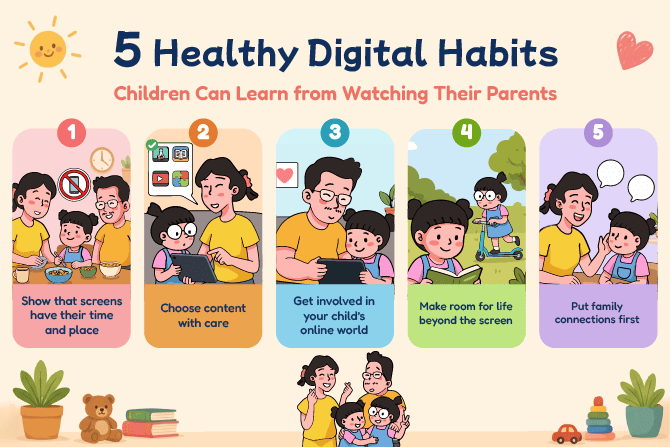
1. Show that screens have their time and place
- Protect the moments that matter the most by keeping mealtime, playtime, and bedtime screen-free
- Set clear routines to guide when screens should be brought out and when they should be put away
2. Choose content with care
- Take time to choose educational and age-appropriate content instead of letting autoplay or algorithms decide
- Use parental controls to manage content and screen time
- Show that using digital devices involves making choices about how, when and why we use them
3. Get involved in your child’s online world
- Watch and explore online content with your child. Sharing these moments helps you stay connected to their digital world and opens the door to natural conversations about what they enjoy.
- Talk about what they have watched to help them understand, reflect on and learn from it
4. Make room for life beyond the screen
- Make time for play, reading, outdoor play, and other activities away from screens
- Help children discover that fun, learning and connection can happen both online and offline
5. Put family connections first
- Create space for real connection by putting screens aside during family conversations and activities
- Be mindful of your own screen use to ensure that screens do not quietly crowd out opportunities to connect with your child
Progress, Not Perfection
No parent gets it right all the time. Some days, a device helps keep your child occupied while you prepare a meal, finish a task or take a short break. And that is part of the reality of parenting.
Parenting in the digital age is not about being perfect, but about making small, intentional choices over time. Children learn by watching the adults around them, so simple actions such as putting your phone away during mealtimes, showing interest in what they watch, or co-viewing and talking about their online experiences can help shape healthy habits from young. These small moments build trust, so your child knows they can come to you for support.
For more practical tips to support your child’s digital journey, visit bescreensmart.gov.sg.


 Together Against RSV
 Pregnancy
 Parenting
 Feeding & Nutrition
 Events
 Holiday Hub
 Aptamil
 TAP Recommends
 Shopping
 Press Releases
 Project Sidekicks
 Community
 Advertise With Us
 Contact Us
 VIP
 Rewards
 VIP Parents

