There are many types of genetic disorders that affect the nervous system. One of them is Angelman syndrome . This syndrome was first described in medical literature in 1965 by Dr. Harry Angelman, a British physician. The characteristic findings of Angelman syndrome are usually not visible at birth and the diagnosis of the disorder is usually made between the ages of 1 and 4 years.
Children with this syndrome have their own unique characteristics. Here are some facts about Angelman syndrome in babies or children.
Definition
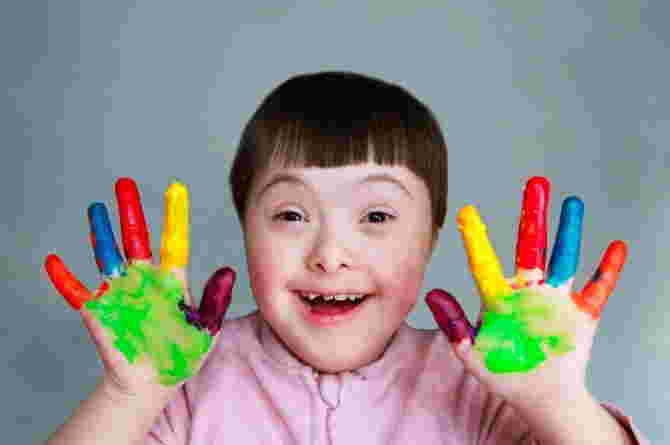
Angelman Syndrome is a complex genetic disorder, primarily affecting the nervous system. Characteristic features of the condition include delayed development, intellectual disability, severe speech disorders, and problems with movement and balance (ataxia).
Most affected children also have recurrent seizures ( epilepsy ) and small head size ( microcephaly ). Delayed development becomes apparent by 6 to 12 months of age, and other common signs and symptoms usually appear in early childhood.
Symptoms of Angelman Syndrome
A child with Angelman syndrome will begin to show signs of delayed development around 6 to 12 months of age, such as being unable to sit without support or making babbling sounds.
Later, they may not speak at all or may only be able to say a few words. However, most children with Angelman syndrome will be able to communicate using gestures, signs, or other systems.
A child with Angelman syndrome may also have difficulty walking due to problems with balance and coordination (ataxia). Their arms may shake or make jerky movements, and their legs may be stiff.
The National Health Service notes that several typical behaviors are associated with Angelman Syndrome , including:
- Laugh and smile often, often with little stimulation.
- Becoming easily excited, often flapping hands
- Restless (hyperactive)
- Have a short attention span
- Difficulty sleeping and needing less sleep than other children
- A certain fascination with water
Around 2 years of age, a small head that is flat at the back (microbrachycephaly) may be seen in some children with Angelman syndrome. Children with Angelman syndrome may also begin having seizures or convulsions at this age.
Other possible symptoms of this syndrome include:
- Tendency to stick out tongue
- Crossed eyes (strabismus)
- Paler skin, hair, and eyes than other family members
- Wide mouth with wide teeth spacing
- Curvature of the spine from side to side (scoliosis)
Some young babies with Angelman syndrome may have difficulty feeding because they are unable to coordinate sucking and swallowing. In such cases, a high-calorie formula may be recommended to help the baby gain weight. Babies with Angelman syndrome may need to be treated for reflux.
However, as children with Angelman syndrome grow older, they become less excitable, and sleep problems tend to improve. However, affected individuals continue to have intellectual disabilities, severe speech disorders, and seizures throughout their lives. Adults with Angelman syndrome have distinctive facial features that can be described as “grouchy.”
Other common features include very fair skin with light-colored hair and an abnormal curvature of the spine (scoliosis). Life expectancy for people with this condition appears to be nearly normal.
Reason

Quoting from the Mayo Clinic page , Angelman Syndrome is a genetic disorder that is usually caused by a problem with a gene located on chromosome 15 called the ubiquitin protein ligase E3A (UBE3A) gene.
The missing or damaged gene comes from the parents, one copy from the mother (the maternal copy) and the other from the father (the paternal copy). Cells usually use information from both copies, but in a small number of genes, only one copy is active.
Normally, only the mother’s copy of the UBE3A gene is active in the brain. Most cases of Angelman Syndrome occur when part of the mother’s copy is missing or damaged. However, in some cases, it is caused when two copies of the paternal gene are inherited, rather than one from each parent.
Risk Factors
Angelman syndrome is rare. Researchers generally do not know what causes the genetic changes that lead to Angelman syndrome. Most people with Angelman syndrome do not have a family history of the disease.
Sometimes, Angelman syndrome can be inherited from a parent. A family history of the disease can increase a baby’s risk of developing Angelman syndrome.
However, quoting from the pageAngelman Syndrome News, cases of Angelman Syndrome have been reported in various countries and among people of various ethnic origins. The majority of cases in North America have been found in people of Caucasian descent.
Angelman Syndrome Incidence Rate
According to the National Organization for Rare Disorders (NORD) , Angelman Syndrome affects males and females in equal numbers. The prevalence of Angelman syndrome is estimated to be around 1 in 12,000-20,000 people in the general population. However, many cases may go undiagnosed, making it difficult to determine the prevalence of the disorder in the general population.
Diagnosis
A pediatrician may suspect Angelman syndrome if a child has developmental delays, particularly minimal or no language, and other signs and symptoms of the disorder, such as seizures, problems with movement and balance, small head size, and a happy demeanor.
A definitive diagnosis can almost always be made with a blood test. This genetic test can identify abnormalities in a child’s chromosomes that indicate Angelman Syndrome . A combination of genetic tests can reveal the chromosomal defects associated with Angelman syndrome. These tests can look for:
- Parents’ DNA patterns . This test, known as a DNA methylation test, screens for three of the four known genetic abnormalities that cause Angelman syndrome.
- Missing chromosomes . Amicroarraychromosome aberration (CMA) can show if part of a chromosome is missing.
- Gene mutations . Rarely, Angelman syndrome can occur when a person’s maternal copy of the UBE3A gene is active but mutated. If the results of a DNA methylation test are normal, your child’s doctor may order a UBE3A gene sequencing test to look for the maternal mutation.
Most children with Angelman syndrome are diagnosed between the ages of 9 months and 6 years, when physical and behavioral symptoms become apparent.
Possible Complications
Complications associated with Angelman Syndrome include:
- Difficulty feeding (lack of coordination between sucking and swallowing)
- Hyperactive
- Sleep disorders (less sleep than most people)
- Spinal curvature (scoliosis)
- Obesity due to having a large appetite.
Angelman Syndrome Prevention
In rare cases, Angelman Syndrome can be passed from an affected parent to a child through a defective gene. If you are concerned about a family history of Angelman syndrome or if you already have a child with the disorder, consider talking to your doctor or a genetic counselor to help plan for future pregnancies.
Angelman Syndrome Treatment
Depending on your child’s signs and symptoms, treatment for Angelman syndrome may involve:
Anticonvulsant Drugs
Antiseizure medications (anticonvulsants) are very helpful for those who have seizures. Usually seizures can be adequately controlled with one medication but in some cases seizure control may be difficult and multiple medications may be needed.
No single anticonvulsant medication has proven to be most effective in all cases. Sleep disturbances are common and may require behavioral therapy and adherence to a strict bedtime routine. Sometimes, sedatives may help.
Physical Therapy
The general physical health of those with Angelman syndrome is good and usual pediatric care, including usual childhood immunizations, can be provided.
Ankle braces/supports and physical therapy can help achieve walking. Scoliosis can progress in about 10% and may require braces or surgical correction. In some cases, strabismus may require surgical correction.
Communication and Speech Therapy

Communication therapy can help them develop nonverbal language skills. Such as sign language and using visual aids using apps on mobile phones and similar tablet devices can also help.
Behavioral Therapy
Behavior modification therapy can be used to prevent unwanted behaviors. The use of special communication devices such as computer image-based systems, voice-emitting devices, and the use of other modern technologies all help individuals with Angelman syndrome provide better learning and social communication.
This therapy is usually to help with hyperactivity and short attention span and to aid development.
Sleep Training and Medication
This type of training or therapy aims to overcome sleep problems in children who have Angelman syndrome and have an impact on severe sleep patterns.
Diet and Drug Therapy
This therapy is to help with digestive problems such as feeding difficulties and constipation. Feeding difficulties can be overcome with modified breastfeeding methods and with methods such as special nipples to help babies with poor sucking ability. Gastroesophageal reflux can be treated with upright positioning and medications that help move food through the digestive system (motility drugs).
Surgery to tighten the valve connecting the esophagus to the stomach (esophageal sphincter) may be necessary in some cases. Laxatives may be used to treat constipation.
The good news is that seizures usually improve over time, although they can return in adulthood. As people with Angelman syndrome get older, they become less hyperactive and sleep better.
Hopefully this information is useful!
***
Republished with permission from theAsianParent Indonesia


 Together Against RSV
 Pregnancy
 Parenting
 Child
Child Feeding & Nutrition
 Education
 Lifestyle
 Events
 Holiday Hub
 Aptamil
 TAP Recommends
 Shopping
 Press Releases
 Project Sidekicks
 Community
 Advertise With Us
 Contact Us
 VIP
VIP Rewards
 VIP Parents
