Infant Health and RSV Highlighted at Community Baby Preparation Workshop
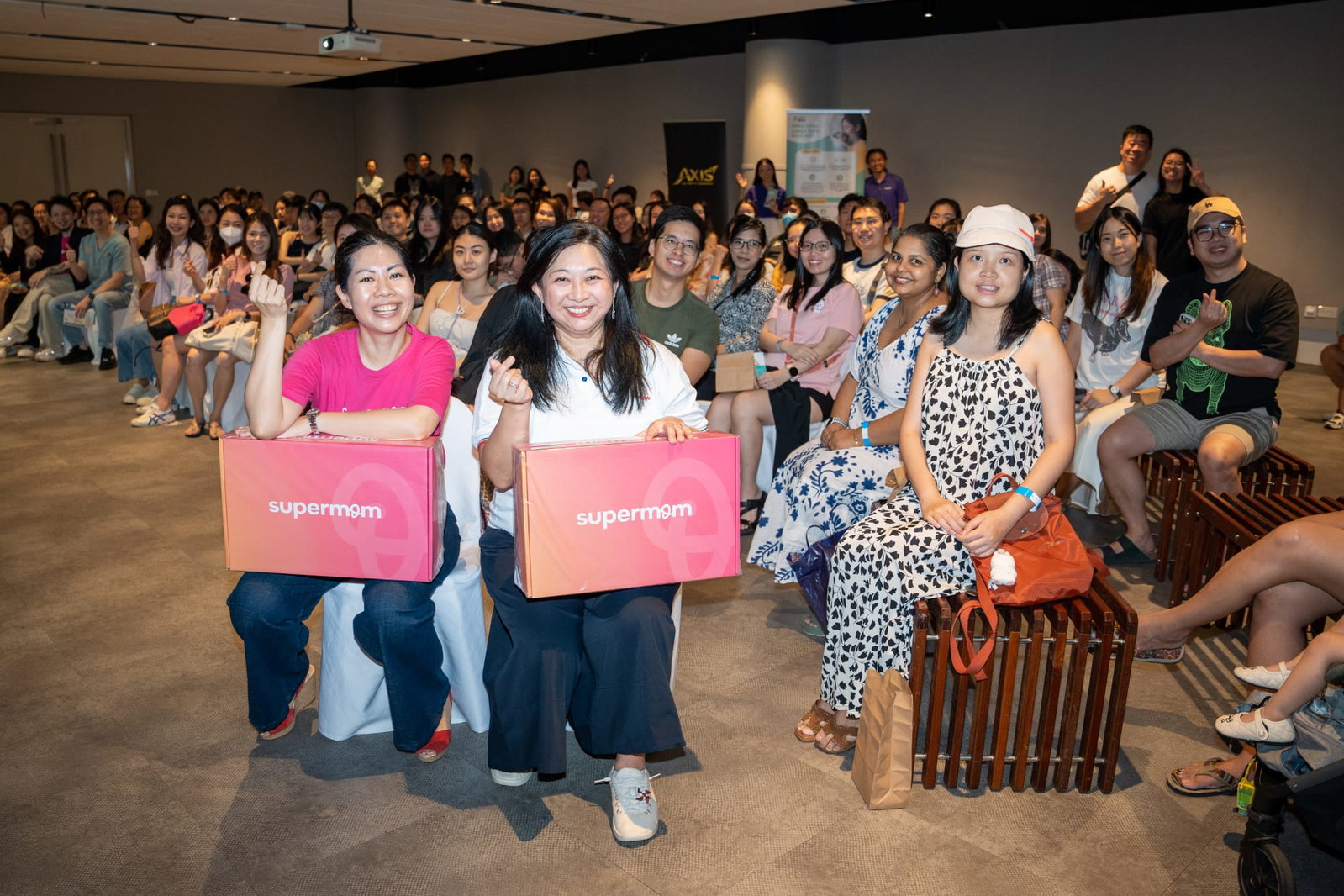
Baby Prep Masterclass held at One Punggol CC on 2 May 2026, conversations went beyond the usual newborn preparation advice.
For many parents-to-be, preparing for a baby often starts with the practical things, hospital bags, feeding plans, nursery essentials, and endless checklists. But at the Baby Prep Masterclass held at One Punggol CC on 2 May 2026, conversations went beyond the usual newborn preparation advice.
Bringing together expecting parents and young families for an afternoon of talks and shared experiences, the session focused on the realities of early parenthood, from nutrition and infant care to the emotional and practical challenges families may not always anticipate.
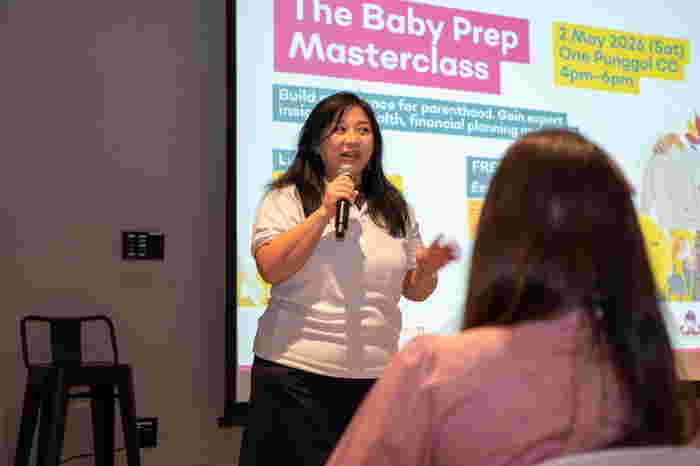
Member of Parliament Yeo Wan Ling joined the session and engaged with parents throughout the afternoon.
Member of Parliament Yeo Wan Ling joined the session and engaged with parents throughout the afternoon, reinforcing the importance of stronger support systems and community conversations for young families navigating this new stage of life. The turnout reflected a growing interest among parents to better prepare not just for birth, but for the realities that come after.
Among the sessions that resonated most with parents was a conversation between Dr Adrian Tan, Medical Director of Babysteps Medical Singapore, and parent Phoebe Teoh, centred around Respiratory Syncytial Virus (RSV). Rather than a formal presentation, the segment unfolded more like an honest discussion between a doctor and a parent, combining medical insight with lived experience.
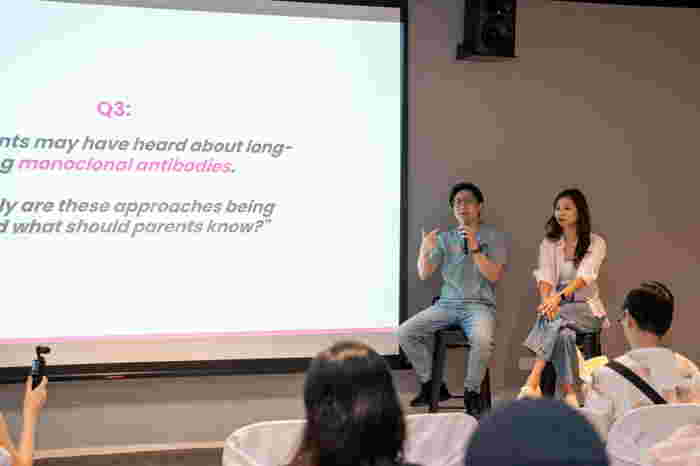
Dr Adrian explained that RSV is a common respiratory virus that often presents with mild, cold-like symptoms such as a runny nose or cough, which makes it difficult to distinguish from a typical cold1. However, in infants, the infection can progress to more serious conditions such as bronchiolitis or pneumonia, particularly because their lungs and immune systems are still developing2.
He also highlighted that RSV circulates year-round in Singapore and is easily transmitted through close contact or respiratory droplets, which makes exposure difficult to avoid, especially for families with infants or siblings attending childcare3.
For many parents in the room, Phoebe’s sharing brought a different layer to the conversation. Recounting her infant’s experience with RSV, she spoke about how the illness initially appeared manageable before escalating, and how quickly daily life shifted around caregiving.
Beyond the medical aspect, she described the round-the-clock monitoring, disrupted sleep, hospitalisation cost and other financial implications3, and emotional stress that came with caring for a sick child. It was a reminder that when a baby falls ill, the impact is often felt across the entire household, affecting routines, work schedules, and the mental load carried by caregivers4.
Dr Adrian also spoke broadly about how RSV prevention has evolved in recent years. Traditionally, passive antibody protection was mainly reserved for high-risk infants, such as premature babies or those with certain medical conditions5.
Today, newer preventive approaches are becoming available, including long-acting monoclonal antibodies designed to provide direct protection against RSV for babies from birth up to 12 months, as well as certain high-risk children up to 24 months5. Maternal vaccination during pregnancy was also discussed as another approach that may help protect babies during their first few months of life. Parents were encouraged to consult their paediatricians to better understand the different options available and what may be suitable for their child.
Across the event, a consistent message emerged. Preparing for a baby goes beyond products or checklists. It includes understanding common illnesses, recognising early symptoms, and being ready to respond when something does not feel right.
Beyond the talks, attendees explored partner booths, spoke with healthcare professionals, and left with practical resources, fresh perspectives, and perhaps most importantly, the reassurance that they are not navigating parenthood alone.
As conversations around RSV awareness and infant protection continue to grow, sessions like these reflect a broader shift in how parents are preparing for their child’s first year, not just with products and plans, but with greater awareness, stronger support systems, and more informed conversations around their baby’s health.
—
Talk to your paediatrician or other healthcare professionals about RSV prevention options for your baby. Visit TogetherAgainstRSV.sg.
MAT-SG-2600115-1.0-05/2026
[2] Zar, Heather J et al. Early-life respiratory syncytial virus disease and long-term respiratory health. The Lancet Respiratory Medicine, Volume 12, Issue 10, 810 – 821. doi.org/10.1016/ S2213-2600(24)00246-7
[3] Tam CC, Yeo KT, Tee N, et al. Burden and Cost of Hospitalization for Respiratory Syncytial Virus in Young Children, Singapore. Emerg Infect Dis. 2020;26(7):1489-1496. doi:10.3201/eid2607.190539 https://pmc.ncbi.nlm.nih.gov/articles/PMC7323550/
[4] Adua, L., Ampofo, K., Heller, E., Gesteland, P., Loveride, A., Werdan, K., Miller, K., Platt-Koch, A., Ruggieri, M., Finelli, L., Choi, Y. Caregiver psychological burden of RSV Hospitalization of children 2 years of age and under. The Medical Library of Medicine (2025) https://pmc.ncbi.nlm.nih.gov/articles/PMC12574910/
[5] Goh, D.Y.T., Goh, A., Chen, C.K. et al. Expert consensus on the burden of respiratory syncytial virus disease and the utility of nirsevimab for disease prevention and protection of infants. World J Pediatr 21, 552–565 (2025). https://doi.org/10.1007/s12519-025-00926-2